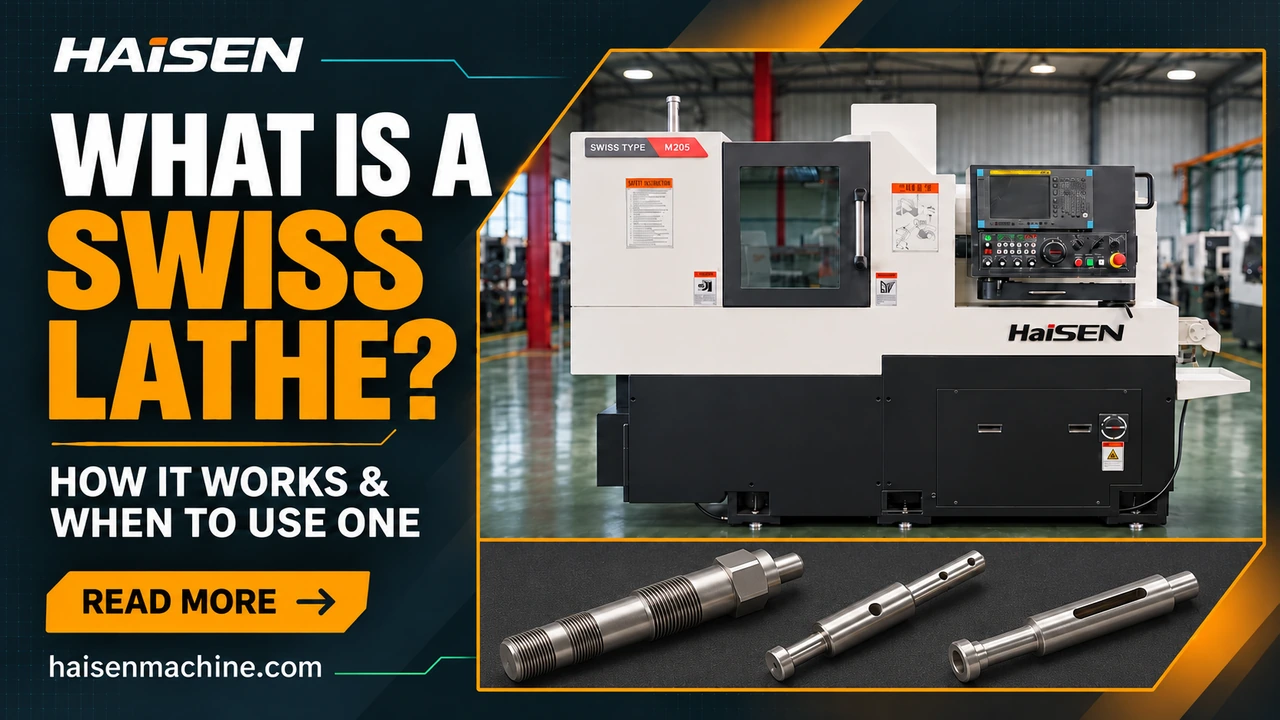
Swiss lathes are used in precision manufacturing, with applications ranging from medical devices to electronics and automotive production. Their design and working method differ from those of conventional CNC lathes, giving them particular strengths and limitations. In this article, we explain what a Swiss lathe is, how it works, which workpieces suit it, and what to consider when choosing one.
What is a Swiss lathe?
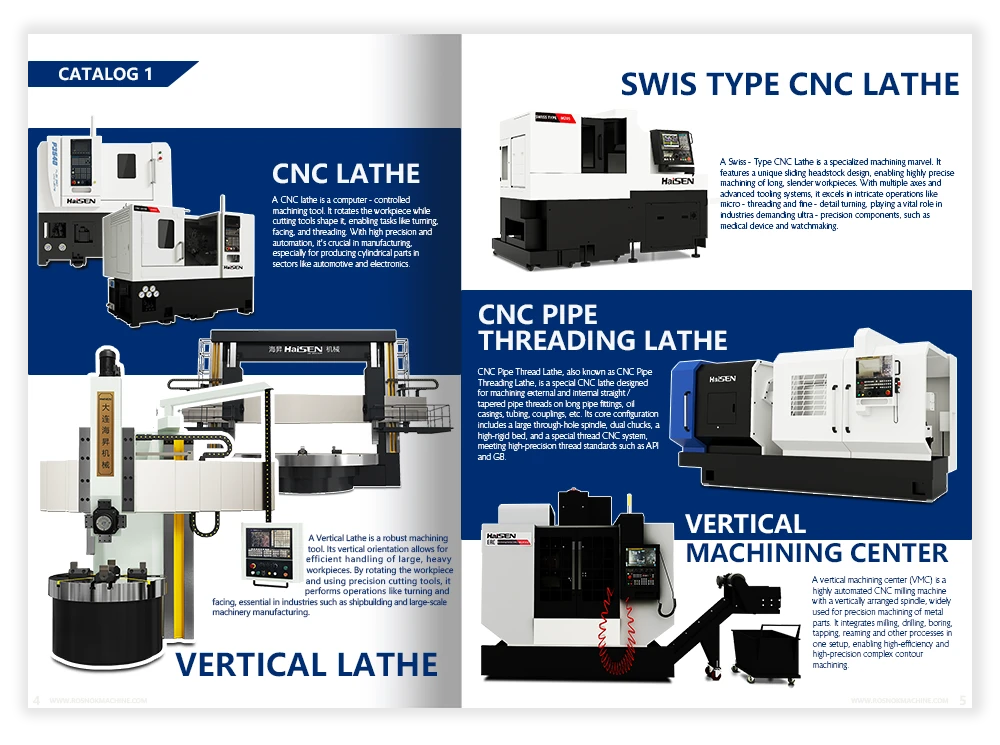
A Swiss lathe is a type of lathe with a sliding headstock that moves the bar stock lengthwise during machining. In its traditional guide-bushing configuration, a close-fitting guide bushing supports the bar beside the cutting tools. This helps control bending when machining small-diameter, long or slender workpieces.
You may also see the names Swiss-type lathe, Swiss automatic lathe and sliding-headstock lathe. “Swiss machining” or “Swiss turning” describes the machining process performed on this equipment.
The name comes from the machine’s origins in Swiss watchmaking. It describes a machine design, so a Swiss-type lathe does not have to be manufactured in Switzerland.
How does a Swiss lathe work?
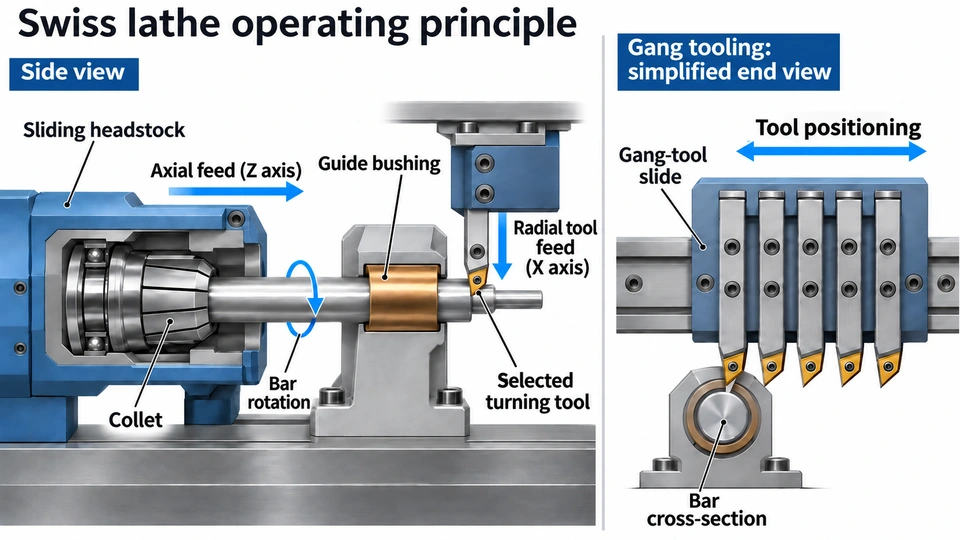
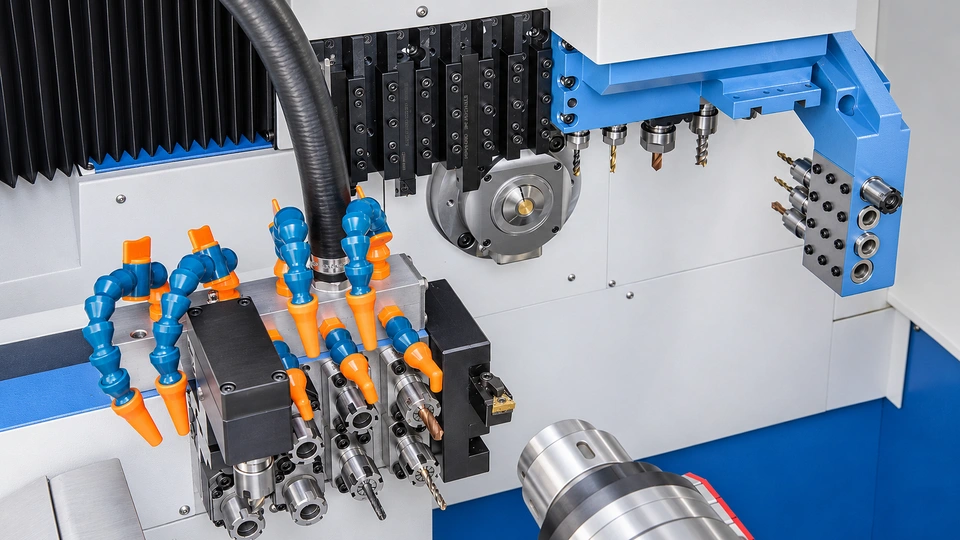
A Swiss lathe rotates the bar and moves it axially through the cutting area. With a guide bushing installed, the cutting tool can work close to the guide-bushing exit, keeping the unsupported length of the bar short.
The headstock, collet and guide bushing have different jobs
The main-spindle collet grips the bar so the spindle can rotate it. The sliding headstock moves the spindle and gripped bar forward and backward along the machine’s length, usually called the Z direction. The guide bushing supports the bar near the cut while allowing it to slide through.
The tools also move to form the required features—for example, across the bar to control diameter—while the headstock provides the characteristic axial feed.
A typical machining cycle
- Load and grip the bar. A compatible bar feeder supplies and supports stock behind the machine; the main collet holds it for machining.
- Turn the required profile. The spindle rotates the bar while headstock and tool movements produce diameters, steps, grooves or other turned features near the guide bushing.
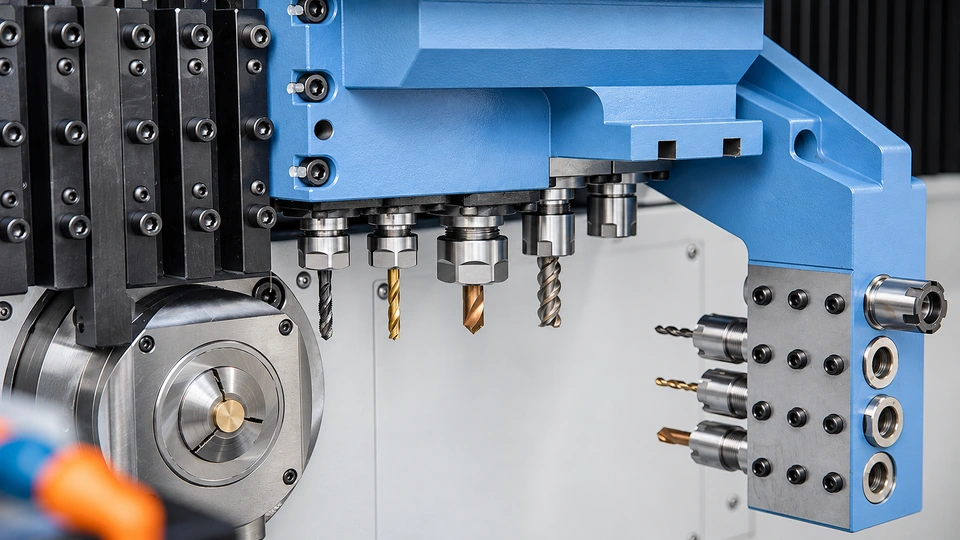
- Complete additional features. If the machine has suitable live tooling and axes, it can also drill cross-holes, mill flats or cut slots.
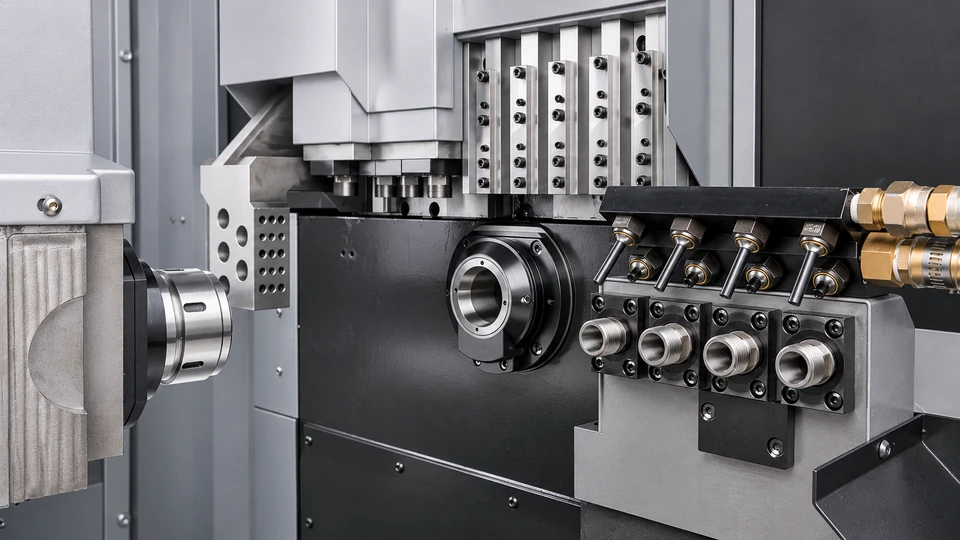
- Part off and finish the back end. A suitably equipped subspindle can grip the component before cut-off and present the second end to backworking tools. Without this arrangement, unfinished back-end features may need another setup.
The bar feeder supplies material; it does not replace the sliding headstock’s controlled cutting feed. Similarly, a subspindle or rotating tool is a configuration feature that must be checked for the selected model.
Can a Swiss lathe operate without a guide bushing?
Yes, some Swiss lathes support guide-bushless operation. This can suit shorter, more rigid workpieces and reduce the unused bar remnant. Long, slender sections may still benefit from close guide-bushing support.
For example, Citizen’s guide-bushing and non-guide-bushing configurations illustrate this distinction. Conversion capability and the usable machining length depend on the machine; they are not standard on every Swiss lathe.
What workpieces can a Swiss lathe produce?
Swiss lathes commonly produce small cylindrical, stepped, tapered and slender workpieces. Typical examples include precision pins, narrow shafts, valve stems, contact pins, sleeves and small fittings. With appropriate powered tools, these turned shapes can also include flats, cross-holes and slots.
| Typical workpiece | Recognizable features | Relevant machining work |
|---|---|---|
| Stepped shaft or precision pin | Several diameters along a narrow body | Turning, grooving and end machining |
| Valve stem or spool | Slender body with shoulders and circumferential grooves | Turning and grooving; additional holes if specified |
| Electrical contact or connector pin | Small round body, tapered end and possibly an axial hole | Turning and drilling |
| Small sleeve, bush or fitting | Round outside profile with an internal bore | Turning, drilling or boring; threading where required |
| Turned component with a cross-hole or wrench flats | Round body with features across or beside its axis | Turning plus suitable powered drilling or milling |
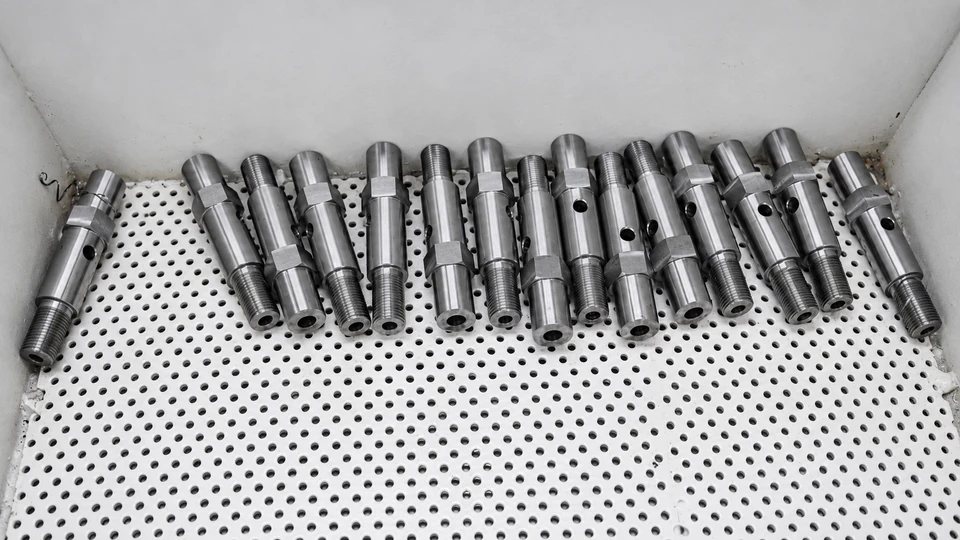
These geometries occur in electronics, fluid-control equipment, medical devices and automotive assemblies. Industry names alone do not determine suitability: your drawing, material, dimensions and required operations do.
With live tooling, driven holders rotate cutting tools for drilling or milling. This capability can be fitted to both Swiss-type and fixed-headstock CNC machines; it does not by itself make a lathe “Swiss.”
Swiss lathe vs. conventional CNC lathe: key differences
The main difference is how the machine moves and supports the workpiece. Both types rotate the workpiece during turning. On a typical fixed-headstock CNC lathe, the cutting tool travels along the workpiece; on a Swiss lathe, the sliding headstock provides the characteristic axial bar movement.
| Comparison | Swiss-type CNC lathe | Conventional fixed-headstock CNC lathe |
|---|---|---|
| Workpiece support | Collet grip plus near-cut guide-bushing support in guide-bush mode | Chuck or collet; a tailstock or steady rest may provide extra support |
| Machining accuracy | Guide-bushing support close to the cut reduces workpiece deflection, helping maintain tight dimensional tolerances on slender workpieces. | Can also produce high-precision parts. Slender workpieces may need a tailstock, steady rest or other suitable support to maintain tight tolerances. |
| Typical starting material | Bar stock matched to the collet, guide bushing and feeder | Bar stock or individual blanks, including suitable castings and forgings |
| Typical strengths | Small bar-fed components, especially slender sections and repeated multi-operation work | A broad range of turned workpieces, including larger diameters and chuck-held blanks |
| Additional machining and backworking | Axial drilling can use a stationary drill; cross-machining and backworking depend on the required tooling, axes and spindle arrangement | Axial drilling, powered-tool operations and backworking are also possible with suitable tooling and spindle arrangements |
| Production preparation | Guide-bushing fit, bar condition, tool layout and operation sequence need close attention | Workholding and tool setup vary widely with the job |
A Swiss lathe is itself a CNC lathe when it uses CNC control. The useful comparison is therefore Swiss-type versus fixed-headstock equipment, rather than “Swiss versus CNC.” Neither design automatically guarantees a tighter finished-part tolerance.
When should you use a Swiss lathe?
Consider a Swiss lathe when your workpieces benefit from close support during turning, or when repeated small-part production can benefit from combining several operations in one machine.
- Your workpiece has slender sections. Examples include a long narrow pin or a stepped valve stem that could bend under cutting pressure.
- You need to turn and cross-machine small bar-fed parts. A connector body with an axial bore, cross-hole and flats may suit a Swiss machine with the necessary powered tools.
- You repeatedly produce the same part family. Proven bar feeding, tooling and part collection can reduce manual handling between components.
- Both ends need machining. A suitable subspindle and backworking arrangement may remove a separate re-clamping operation.
When might a conventional CNC lathe be a better choice?
A conventional CNC lathe may be a better fit for large flanges, bulky short workpieces, cast or forged blanks, and jobs that need flexible chuck workholding. It may also be sufficient for simple parts that are already well supported and need few operations.
Small batches do not automatically rule out a Swiss lathe, but frequent changes between unrelated parts can make setup time significant. Compare the complete production route. A short rigid bush, for example, may gain little from a guide bushing even though it is small enough to fit the machine.
What should you check before choosing a Swiss lathe?
Start with representative workpiece drawings and the bar stock you can actually source. Then check the machine’s usable capacity, support arrangement, tooling and production cost against those jobs.
Bar diameter and finished-part length
Check the raw bar diameter, including machining allowance, against the selected machine, collet, guide bushing and feeder. A finished diameter that fits the catalogue limit does not prove the required starting stock will fit.
Also distinguish headstock stroke from the complete part length the proposed process can produce. Longer parts may need a suitable regripping sequence, support or extraction arrangement. Confirm these details from the drawing rather than assuming the listed stroke is either a universal part-length limit or unlimited capacity.
Guide-bushing mode and bar quality
Confirm whether the model uses a guide bushing, offers a removable-guide-bushing mode, or has another specified support arrangement. Ask for the accepted bar diameter variation, straightness, roundness and surface condition.
A bar that binds in the bushing or has excessive clearance can undermine the process. Ground bar is often used, but the accepted stock condition depends on the bushing system. Star’s explanation of guide-bushing adjustment for bar-diameter variation shows why the stock and support system must be matched.
Tooling, axes and backworking access
Make a list of the actual operations: turning, axial drilling, cross-drilling, flats, slots and back-end work. Ask the supplier to identify the tool positions, holders, driven-tool capacity and axis movements needed for each one.
A higher axis count does not prove that a particular hole or slot is accessible. For backworking, confirm where the subspindle can grip the part, how much material it holds, and whether the required tools can reach the remaining features.
Setup time, material use and cost per accepted part
Compare the cost of producing usable components, including setup, programming, cutting tools, bar stock, unused remnants, cycle time, inspection and any secondary work. Include the bar feeder, required holders and commissioning support when comparing quotations.
Repeated batches can spread setup effort over more components. For expensive stock, the remnant left at the end of each bar also matters. There is no universal minimum batch quantity or guaranteed payback period for Swiss machining.
Trial machining and operator preparation
Before committing to a configuration, agree on a representative part and material for evaluation. Specify the critical dimensions, surface finish, burr requirements and inspection method. If cycle time matters, define whether the quoted time includes transfer, cut-off, collection and other non-cutting movements.
Confirm training for the control, guide-bushing setup, tool offsets and any synchronized main/subspindle programs. Bar feeding supports automation, but reliable production also depends on chip control, tool life and part handling.
Frequently asked questions
Is a Swiss screw machine only used to make screws?
No. “Swiss screw machine” is a traditional name for this family of equipment. It can also produce pins, shafts, contacts, bushes and other turned components. Screw threads are one possible feature, not a requirement.
What materials can a Swiss lathe machine?
Common materials include steels, stainless steels, brass, aluminium and titanium alloys. Suitable machines and tooling can also process engineering plastics. Confirm the material grade and bar condition, since chip formation, cutting forces and surface requirements affect the setup.
How accurate is a Swiss lathe?
There is no single tolerance that applies to every Swiss lathe or workpiece. Near-cut support helps control deflection, but achievable accuracy also depends on the machine, stock, tools, thermal conditions and measurement method. Verify your critical drawing tolerances with an agreed machining and inspection trial.
Is Swiss-lathe programming different from conventional turning?
Yes. The sliding headstock changes how axial movement and the operation sequence are planned. Machines with independent tool groups or a subspindle may also need synchronized programs. Check the actual control and machine documentation; conventional turning experience does not replace machine-specific training.
How much does a Swiss lathe cost?
The price depends on the machine size, brand, control, spindle arrangement, powered tools and automation package. Request a quotation for a defined configuration and check what is included. Feeder equipment, holders, installation and training can materially affect the total starting budget.
Conclusion
Swiss lathes are particularly valuable for maintaining dimensional consistency on slender workpieces and reducing handling between machining operations. These benefits can improve batch production when the machine and tooling suit the job. To decide whether one is right for you, weigh the gains in quality and productivity against setup effort and the total cost per finished part.
If your work involves slender pins, stepped shafts or small components with additional drilled or milled features, HAISEN Swiss-type CNC lathes are an option to evaluate. We can review your drawings, match the required operations to a suitable configuration and discuss trial machining. Share the material, starting bar size, critical tolerances and expected batches so the discussion begins with the parts you need to produce.