In machine shops and manufacturing plants, reducing repeated setups and workpiece handling can help improve production efficiency. Live tooling expands the range of operations a CNC lathe can perform, allowing more machining work to be completed on the same machine. In this article, we explain what live tooling is, how it works, its common applications, and the tool types and machine configurations that affect its use.
What is live tooling on a CNC lathe?
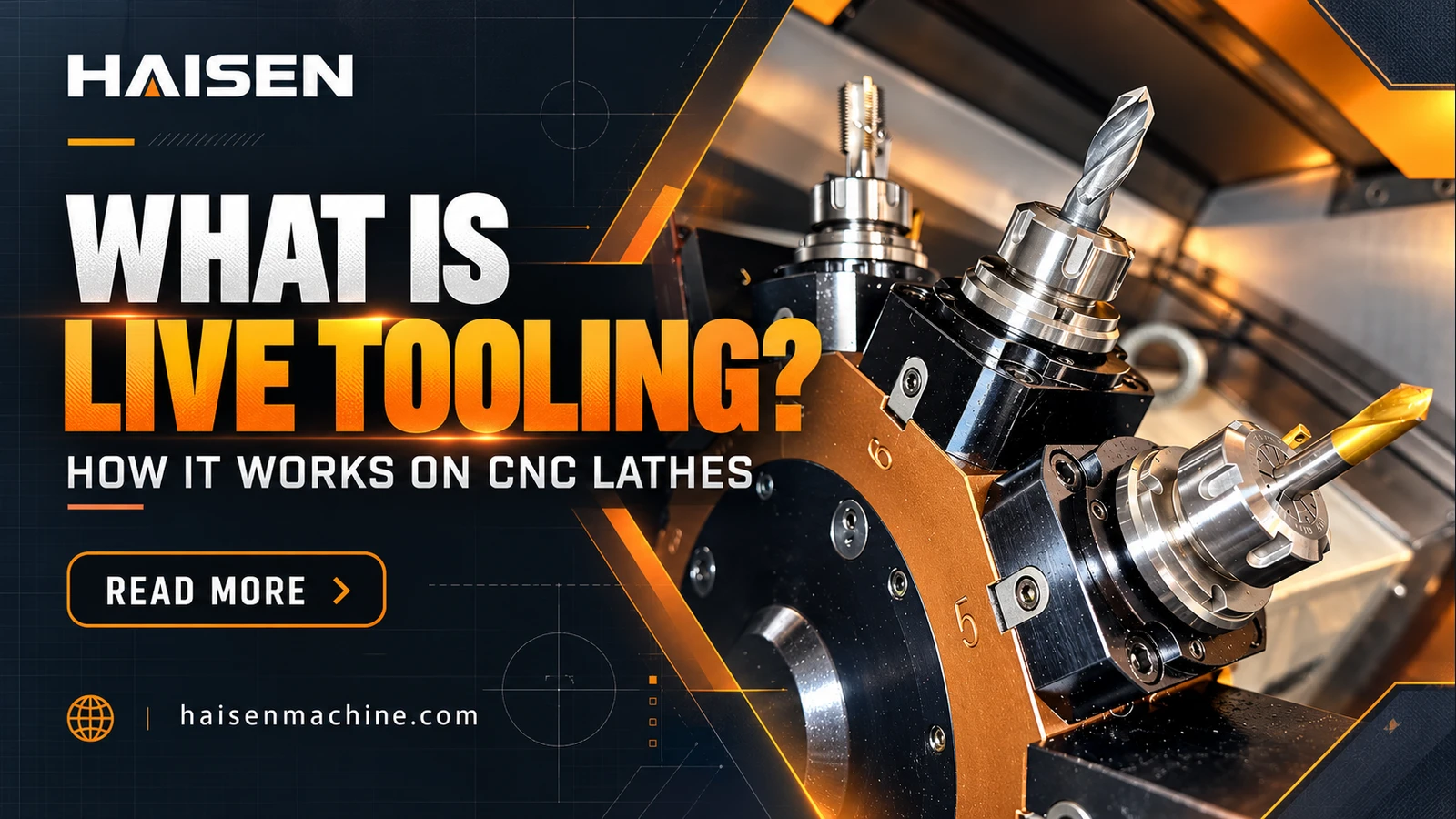
Live tooling is the powered tooling capability that allows a lathe to spin a cutting tool independently of the workpiece spindle. It is also called driven tooling. The term can describe the machine capability or the driven tool-holder assembly.
The cutting tool and the driven holder are different components. A drill, end mill or tap fits into the holder; the machine’s live-tool drive transmits rotation through that holder. A turret may carry both driven holders and static holders for ordinary turning tools.
This is more than a turret rotating to select its next tool. Turret indexing changes which tool is in position; live tooling rotates the cutting tool itself.
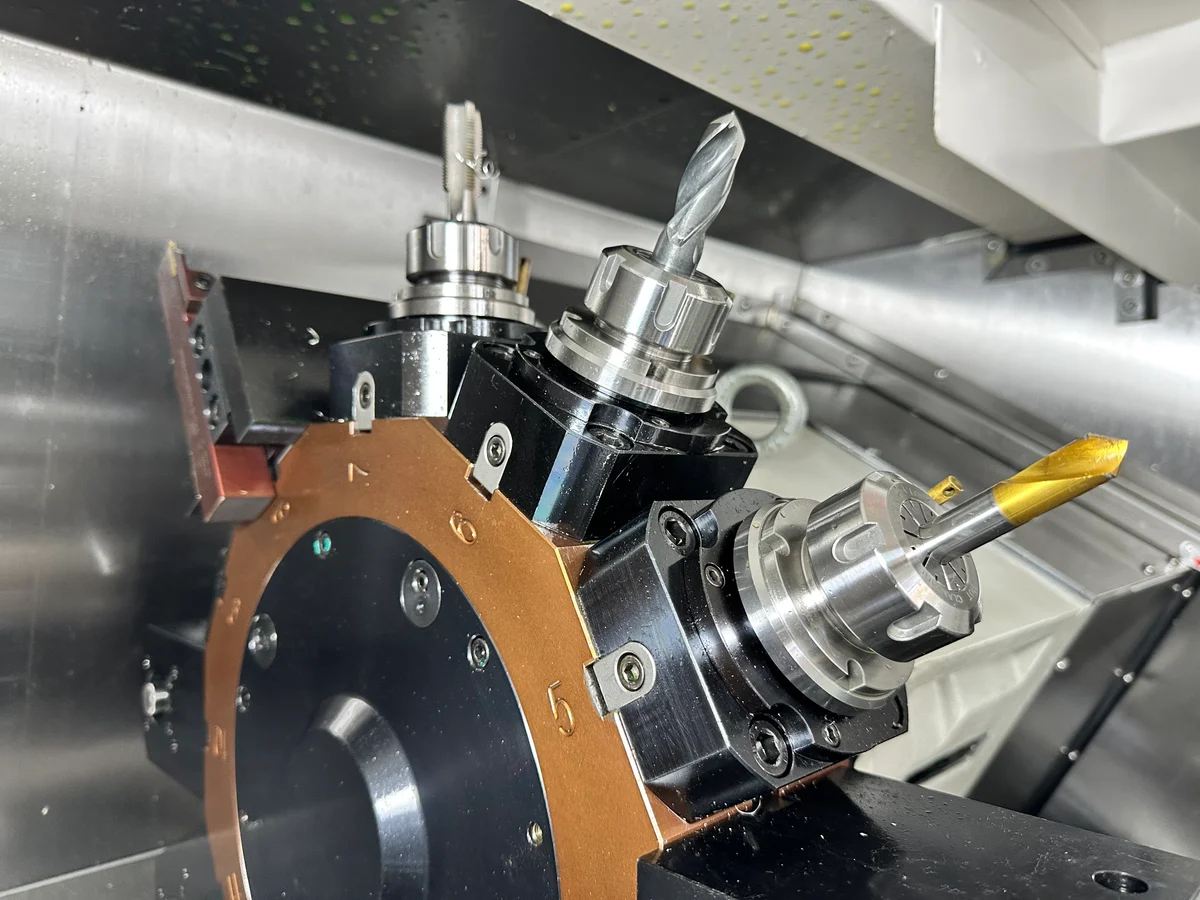
How does live tooling work?
A live-tool drive rotates the cutter while the machine positions the tool and workpiece for the required cut. Compare that with ordinary turning: the workpiece rotates, and a non-spinning cutting tool feeds along or across it to remove material.
Consider a shaft that needs a cylindrical outside diameter and a hole drilled through its side. A typical sequence is:
- Turn the outside diameter. The chuck rotates the workpiece while the turning tool cuts the cylindrical surface.
- Position the workpiece. The machine stops and holds the spindle at the required angular position for the cross-hole.
- Drill the side hole. A driven drill rotates and feeds into the workpiece from the side.
That is one example, not a fixed sequence for every job. During other live-tool operations, the workpiece can rotate under controlled C-axis motion as the cutter follows a contour. It does not always remain stationary.
A drill in a lathe is not automatically live tooling. A conventional lathe can drill an axial hole on the spindle centerline by feeding a non-rotating drill into a rotating workpiece. “Static” means the holder does not power the tool’s rotation; the tool can still move along the machine axes.
What can you machine with live tooling?
Live tooling is especially useful for round workpieces that also need cross-holes, off-center face holes, flats or milled slots. You can recognize the need by looking at the finished part’s features.
- Shafts with cross-holes or keyways. Turning forms the cylindrical or stepped body. A rotating drill makes an accessible transverse hole; an end mill can cut an accessible longitudinal keyway.
- Pins or shaft ends with wrench flats. Turning produces the round sections, and a milling cutter removes material to form the flat gripping faces.
- Flanges with end-face hole patterns. Turning forms the outside diameter, bore and faces. A driven drill machines holes at specified positions around the face, with tapping possible when the machine and tooling support it.
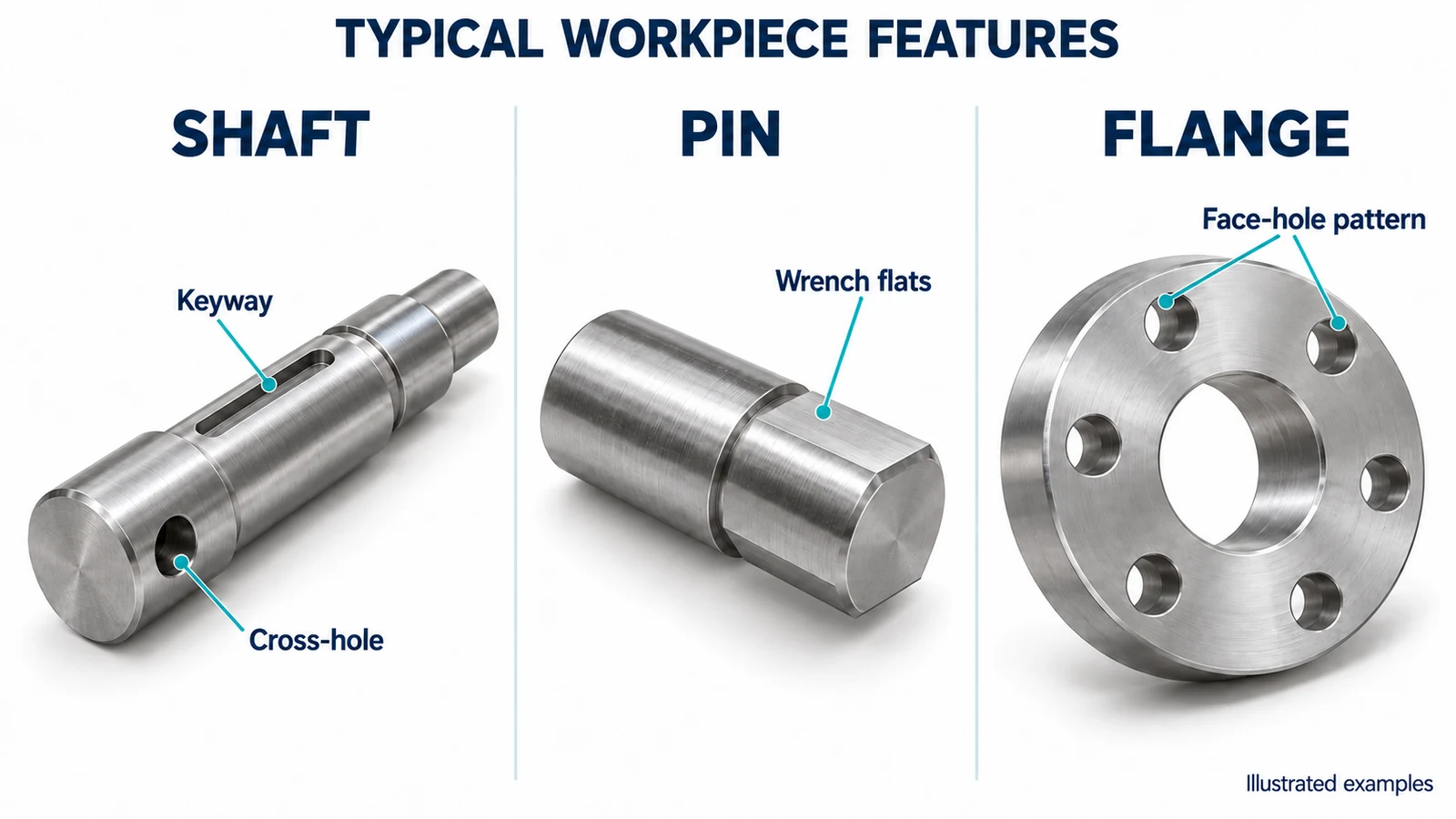
Features hidden by the chuck, on the opposite end, or outside the tool’s reach may still require another setup or a different machine arrangement. Live tooling does not mean every part can be finished in one clamping.
Also distinguish a milled keyway from a circumferential groove. An ordinary turning tool can cut a groove around a rotating shaft; that feature alone does not require live tooling.
What are axial and radial live tools?
Axial and radial describe the direction of the rotating cutter relative to the workpiece’s spindle axis. That direction determines how the cutter approaches the feature.
Axial live tools
An axial live tool has its cutter axis parallel to the workpiece spindle axis. It approaches the end of the workpiece, making it suitable for operations such as drilling the offset holes in a flange face.
Radial live tools
A radial live tool has its cutter axis perpendicular to the workpiece spindle axis. It approaches the side, as when drilling a cross-hole in a cylindrical shaft.
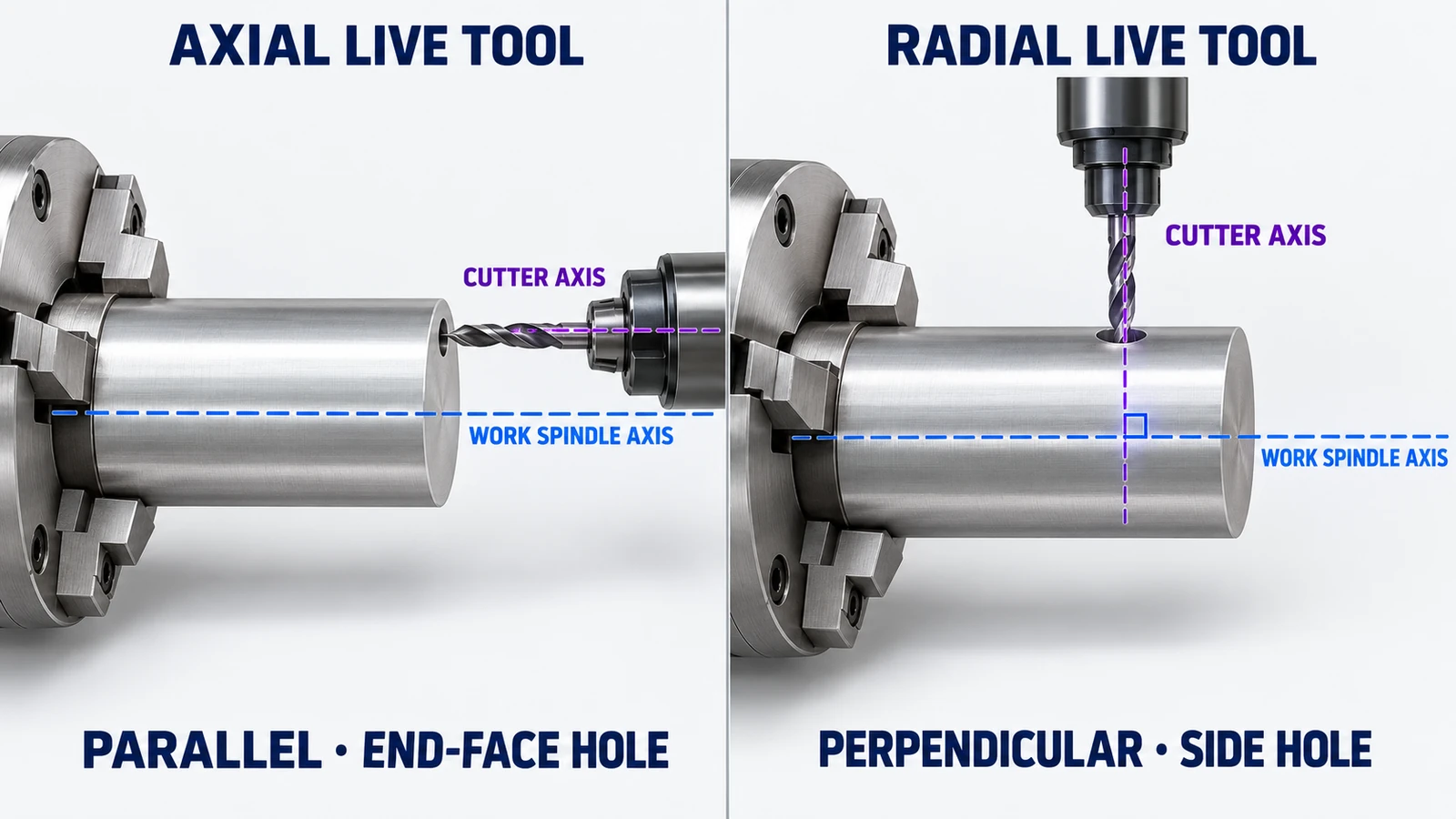
The holder’s body shape alone can be misleading because turret layouts differ. Check the cutter’s direction in the installed position. Specialist holders also exist for other angles and tasks; the Heimatec tool-holder range illustrates the distinction between static holders and different driven-tool forms.
Does live tooling need a C axis or Y axis?
Live tooling does not always require a full interpolating C axis: suitable spindle indexing and clamping can support simple drilling at fixed angular positions. C-axis interpolation is needed when the toolpath requires the workpiece to rotate in coordination with X or Z movement during cutting. A Y axis is also optional; whether its additional sideways tool travel is needed depends on the workpiece features and toolpath.
C axis: positioning or rotating the workpiece
The C axis controls the work spindle’s angular position. For a shaft cross-hole, suitable angular positioning lets the machine present the correct side to the drill. For a flange hole pattern, the machine can combine angular positioning with the tool’s linear position.
Some operations require only positioning and holding at an angle. Others need continuous, coordinated C-axis motion during cutting. A specification that says “spindle orientation” does not by itself confirm full contouring capability.
Y axis: moving the tool laterally
A Y axis adds tool movement perpendicular to the lathe’s X-Z plane. It is useful for features and paths that need this sideways movement, such as certain offset side holes, shifted slots and side contours.
An off-center hole on the end face does not automatically require a Y axis. With appropriate X/Z/C control and an axial live drill, the machine can locate a face hole by its radius and angle. Suitable polar interpolation can also produce some end-face milling paths using X and C motion.
Those functions depend on the machine and control. The Haas C-axis programming explanation provides one manufacturer-specific example. It does not mean C-axis interpolation replaces Y-axis travel for every feature.
When is live tooling worth choosing?
Live tooling is worth considering when your turned workpieces repeatedly need additional drilling, tapping or milling that the turning center can perform effectively. Its main opportunity is reducing transfers, handling and repeated positioning between operations.
Keeping the workpiece clamped for suitable additional operations avoids setting it up again on another machine. Fewer reclamping steps can remove some sources of location error, although finished accuracy still depends on the complete process.
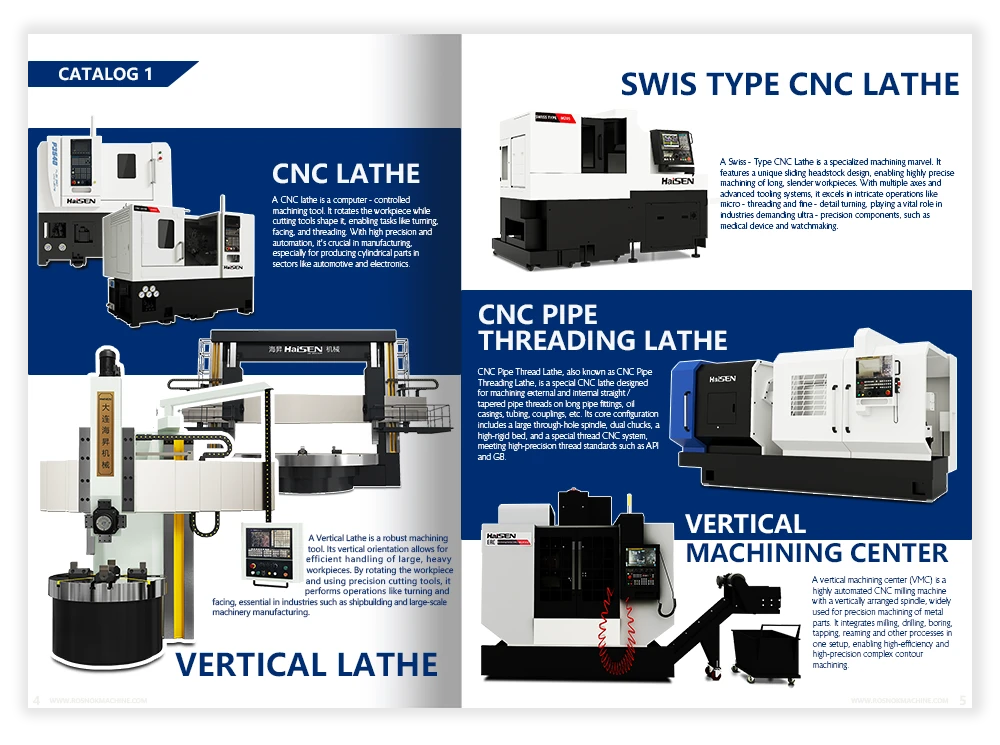
A conventional CNC lathe may be sufficient if your workpieces mainly require cylindrical diameters, faces, tapers, axial bores, turned threads and circumferential grooves. Those features do not automatically justify powered tooling.
Separate turning and milling may make more sense when the milling work is extensive, needs a different working envelope or consumes too much time on the turning center. Machines working in parallel can also suit some production volumes. Compare the whole route—including setup, handling and machining time—instead of assuming fewer machines always means faster production.
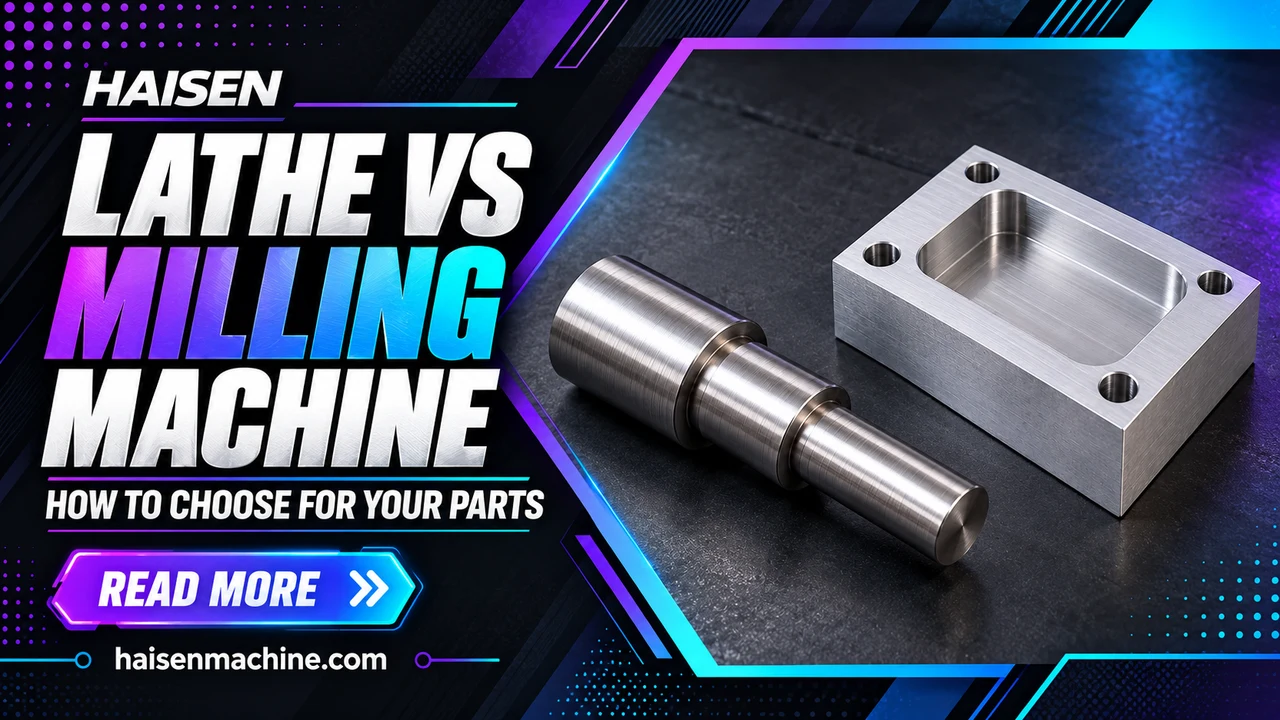
If you are still deciding which machine type suits the part, the differences between a lathe and a milling machine provide the broader starting point.
What should you check before choosing live tooling?
Start with a representative workpiece drawing and confirm that the proposed machine, holders and control can perform its actual features. “Live tooling included” is not a complete description of a usable configuration.
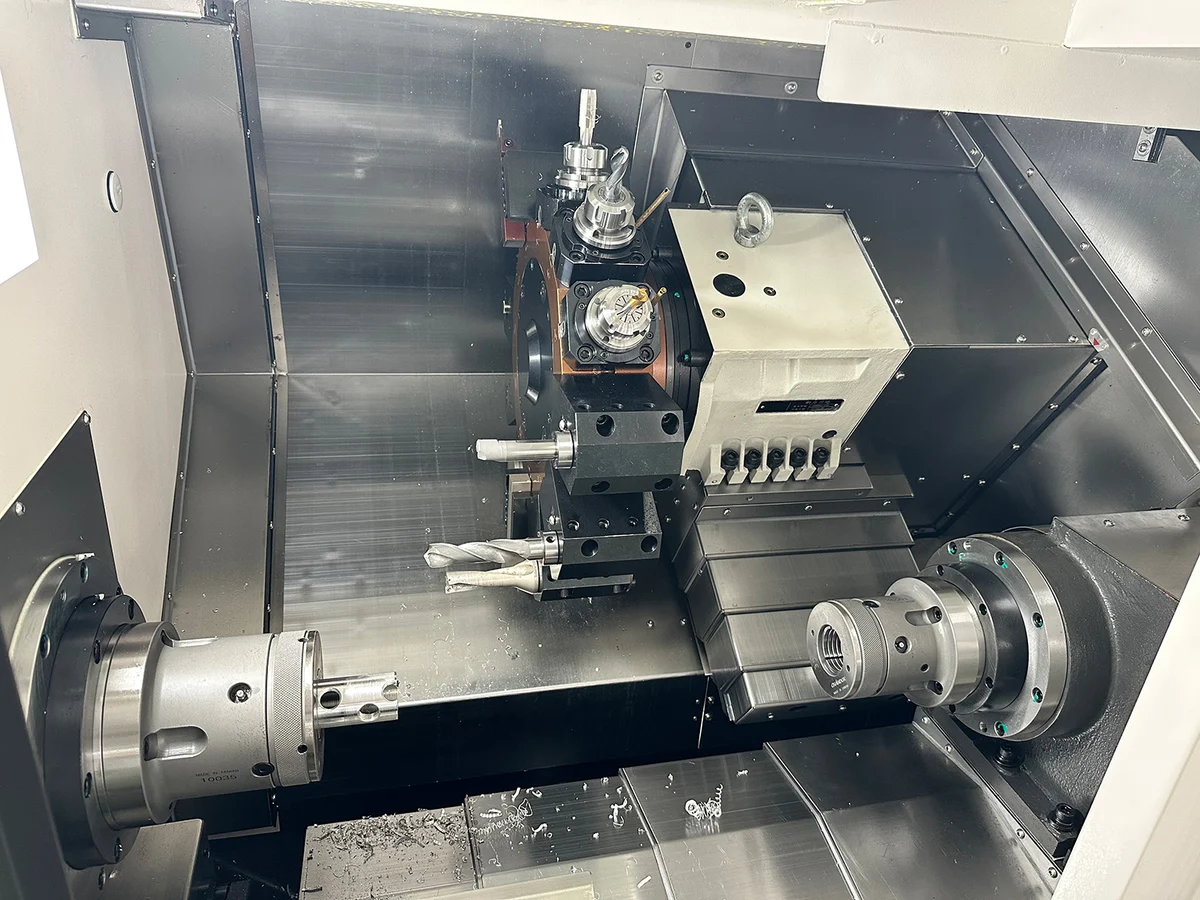
- Feature access and axis functions. Identify the end-face and side features, required tool directions, angular positioning or interpolation, and any Y travel. Check clearance with the intended chuck, workpiece and installed holders.
- Live-tool drive and holder ratings. Check speed, torque and permitted duty for the proposed operation. Main-spindle speed and motor power are separate specifications. Both the drive and holder limits matter.
- Holder compatibility and supplied items. Confirm the number and positions of usable driven stations, as well as the exact turret interface, drive coupling, coolant connection and holder orientation. BMT or VDI naming alone does not prove that a holder fits or that a machine has a working live-tool drive. Ask which holders and accessories the quotation includes.
- Programming and setup support. Confirm how the required drilling and milling paths will be programmed on the supplied control, including relevant options or a suitable CAM workflow. Ask the supplier to demonstrate the proposed method for your part.
- Process verification. For a demanding part, agree how the proposed setup will demonstrate feature access, dimensional requirements and the complete cycle. Include tool changes, positioning and handling when assessing production time.
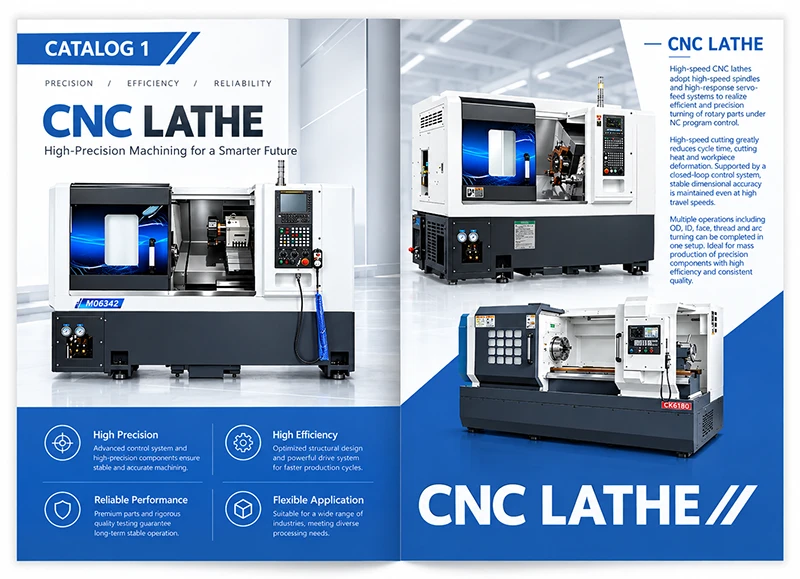
When comparing CNC turning centers with powered-tool configurations, use the same drawing and operation list for each proposal. This makes differences in axes, tooling and included equipment much easier to identify.
Frequently asked questions
Can you add live tooling to an existing CNC lathe?
It depends on the machine and the builder’s supported upgrade options. A driven holder alone cannot add live tooling. The builder must confirm a compatible turret and drive, control support, the required spindle positioning or contouring, electrical integration, and any necessary cooling or lubrication.
Is a live-tool lathe the same as a turn-mill machine?
The terms overlap: a lathe with live tooling can perform both turning and milling. More elaborate turn-mill or multitasking machines may add an independent milling spindle, B-axis positioning, a tool magazine or other capabilities. Compare the actual configuration rather than relying on the machine’s label.
Do you need special cutting tools for live tooling?
Not necessarily. Many applications use suitable standard drills, end mills and taps in compatible driven holders. Check the cutter’s shank, clamping method, size and cutting requirements, along with the available space and speed limits. Restricted access may call for a shorter cutter or a special tool arrangement.
Do you need CAM software for live tooling?
No. Simple supported operations can often be programmed at the control using canned cycles or manual G-code. CAM is useful for more complex milling paths and combined turning-and-milling programs. If you use CAM, confirm that its postprocessor supports the actual machine, control, axes and live-tool functions.
What maintenance do live-tool holders need?
Live-tool holders need cleaning and condition checks according to their manufacturer’s instructions. Have unusual noise, overheating, coolant leakage or deteriorating machining accuracy investigated. Lubrication and servicing are model-specific: some holders use lifetime lubrication, so routine care does not automatically include adding grease. Ask the supplier for the correct maintenance instructions and service support.
Conclusion
Live tooling adds rotating cutting tools to a lathe. With a suitable configuration, it can machine cross-holes, flats, keyways and face-hole patterns on turned workpieces. Its value is clearest when those extra operations can be combined with turning in a practical setup. The workpiece features determine the required tool directions and axis capabilities.
If your workpieces need both turning and additional drilling or milling, HAISEN can help you evaluate a CNC turning center with live tooling. Our range includes powered-turret and Y-axis configurations, with support for machine selection and trial machining based on your application. Share your workpiece drawing, material and production requirements to discuss a suitable machine and tooling setup.