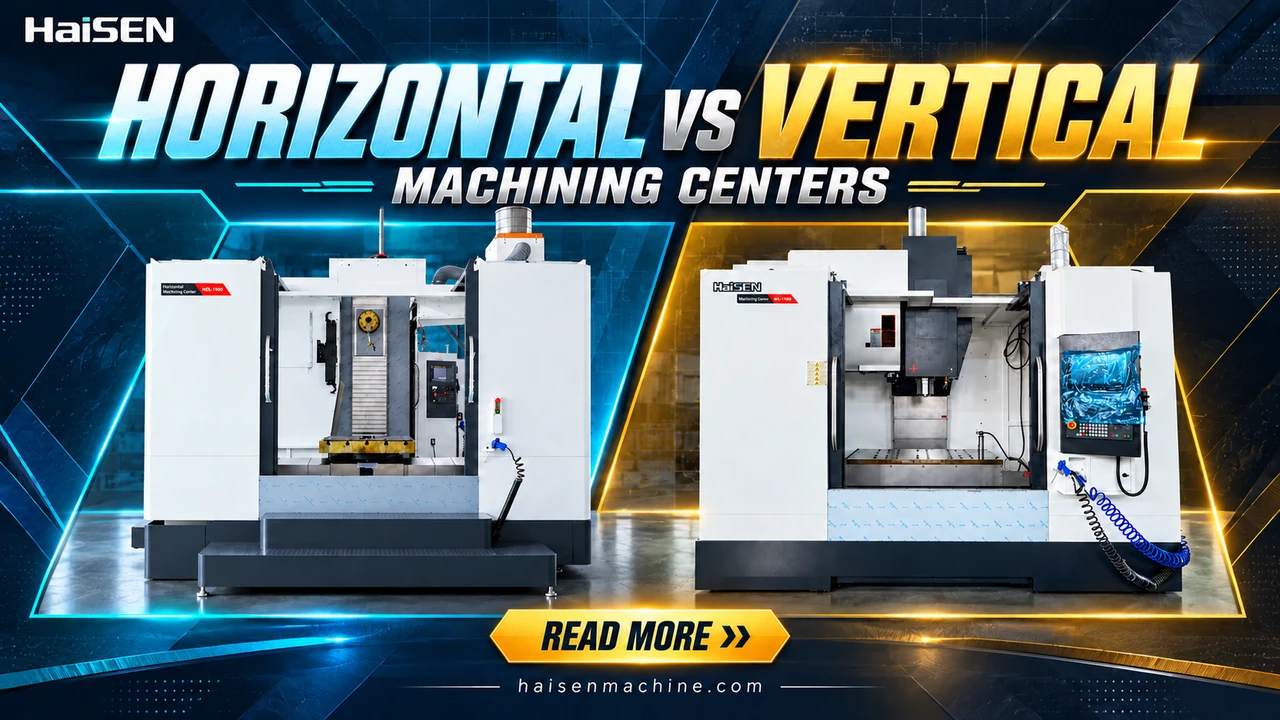
Horizontal and vertical machines can both handle milling, drilling and tapping, but their layouts affect how you hold a workpiece, reach its surfaces and organize production. This article compares horizontal and vertical machining centers, explains their typical applications and shows how to choose a suitable arrangement for your work.
What is a horizontal machining center?
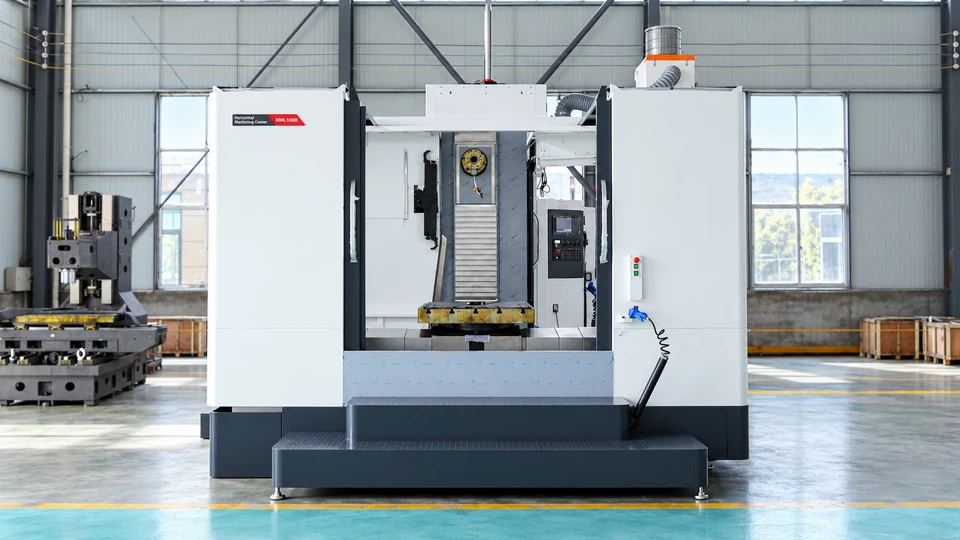
A horizontal machining center (HMC) is a CNC machine with a horizontally positioned cutting-tool spindle. The tool approaches the workpiece from the side. An automatic tool changer allows the machine to switch between tools for operations such as milling, drilling, boring and tapping.
Many HMCs use a rotary table to turn the workpiece toward the spindle. A vertical, multi-face fixture called a tombstone can hold workpieces on several sides. This arrangement is useful for machining housings, valve bodies and other components with features on multiple faces.
The horizontal spindle defines the machine type. Rotary-axis functions, pallet changers and other automation equipment depend on the model and configuration.
What is a vertical machining center?
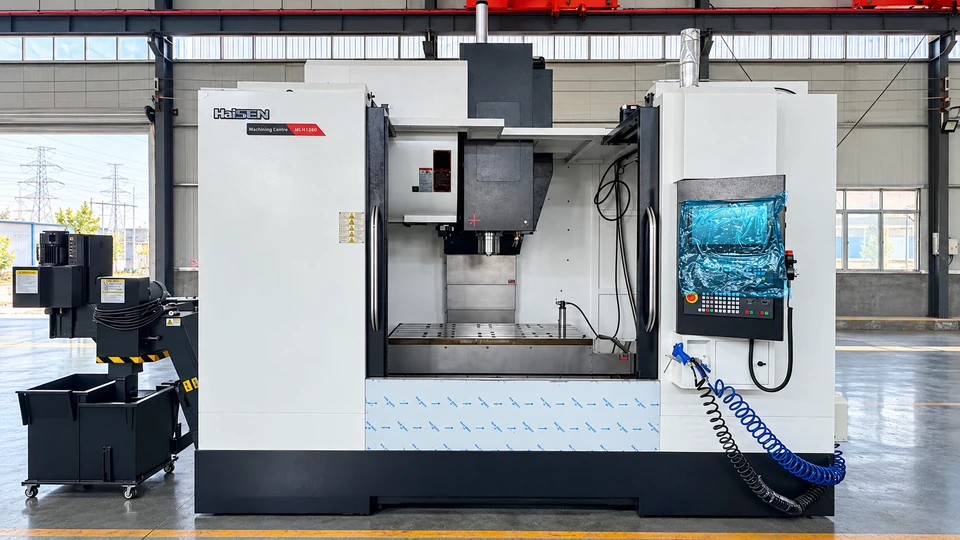
A vertical machining center (VMC) is a CNC machine with a vertically positioned cutting-tool spindle. The tool normally approaches the workpiece from above, while the workpiece is held on a table in a vise, fixture or other workholding device. Like an HMC, it uses an automatic tool changer.
This layout gives straightforward access to the upper surfaces of plates, brackets, mold inserts and many other workpieces. A VMC can machine flat faces, pockets, slots, holes and complex contoured surfaces. It is not limited to simple, flat parts.
A basic VMC uses three linear axes: X, Y and Z. Suitable rotary tables or five-axis configurations can extend its access to angled features and additional faces.
Horizontal vs. vertical machining center: key differences
The main difference is spindle direction, but the practical choice depends on how that layout fits your workpiece and production process. The table compares common HMC and VMC arrangements; specific equipment options can change their capabilities.
Swipe the table horizontally to compare both machines.
| Comparison | Horizontal machining center (HMC) | Vertical machining center (VMC) |
|---|---|---|
| Spindle direction | Horizontal; the tool approaches from the side. | Vertical; the tool normally approaches from above. |
| Typical workpieces | Housings, valve bodies and manifold blocks with features on several faces. | Plates, brackets, covers, mold inserts and other workpieces with accessible upper features. |
| Workholding | Often uses a rotary table with dedicated fixtures or a tombstone. | Often uses vises or plate fixtures; compatible rotary fixtures can add access. |
| Multi-face machining | A suitable rotary table can present several faces without removing the workpiece. | A basic three-axis setup may require repositioning; rotary or five-axis configurations can reduce it. |
| Chip removal | Gravity can help chips fall away from the cutting area. | Upward-facing pockets may retain chips and need effective flushing or evacuation. |
| Production organization | Multi-part fixtures and pallet systems can support repeat work and preparation outside the cutting area. | Direct access suits frequent job changes; production fixtures and pallet automation are also available. |
| Investment and space | A typical production package needs a larger initial budget and space for fixtures and pallet handling. | A basic three-axis package often provides a lower-cost, compact starting point; added equipment changes the comparison. |
Why do workholding and access matter?
Each time you remove and reclamp a workpiece, you spend time locating it again and checking its position. An HMC with suitable rotary workholding can reach several side faces in one clamping. This can simplify the process for a housing with bores and mounting holes on different sides.
A VMC with a compatible rotary axis can also reduce reclamping; neither orientation guarantees complete machining in one setup.
How do chips and pallet changes affect production?
On an HMC, gravity can help chips fall away from side-facing cuts. This advantage is particularly useful when chips would otherwise collect around a cutting tool. DMG MORI explains this relationship in its technical discussion of chip removal and multi-sided fixtures. Both machine types still need suitable coolant delivery and chip handling for the material and feature being machined.
A pallet-changing system can let an operator load or prepare one pallet while another is being machined. It can reduce the time the machine waits for loading, although the pallet exchange itself still takes time. Pallet-changing systems are available on both HMCs and VMCs; confirm what the proposed machine includes.
When should you use a horizontal machining center?
Consider an HMC when your workpieces require substantial machining on several faces and a rotary fixture can reduce repeated handling. It is especially worth evaluating when loading, reclamping or chip accumulation limits production.
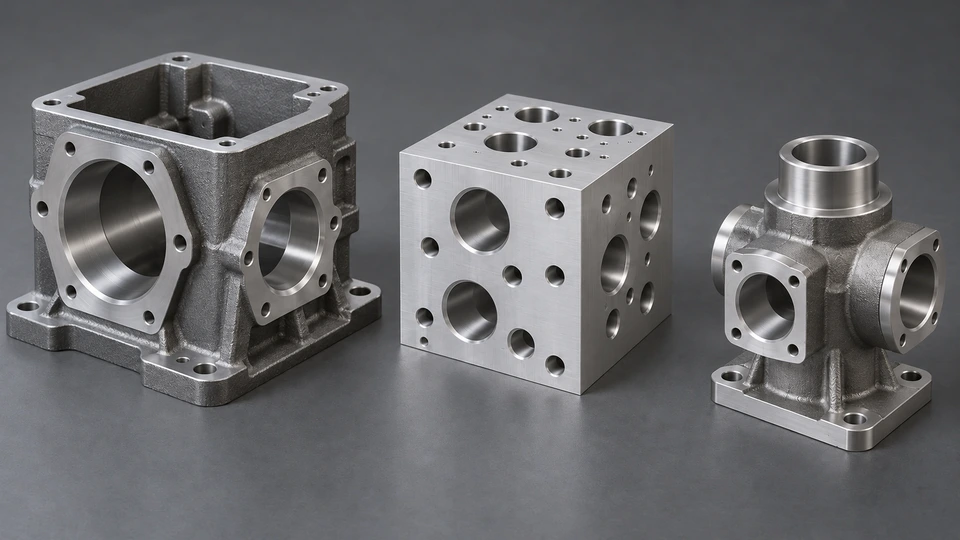
- Your workpiece is a box-shaped housing. Gearbox, pump and similar housings may need bores, mounting faces and hole patterns on different sides. Suitable HMC workholding can bring these faces toward the tool.
- You need to machine a manifold block or valve body. Ports, connecting holes and mounting features on several faces make tool access and the sequence of operations important.
- You repeatedly produce the same part or a related family. Reusable fixtures and prepared pallets can reduce recurring setup work, even when each individual batch is small.
- You need to keep the spindle cutting during part preparation. A suitable pallet arrangement can separate loading from machining, provided preparation keeps pace with the cutting cycle.
For example, a manifold block with features on four side faces is a strong candidate for an HMC with appropriate indexing. If it also needs a feature on the top or underneath the clamp, include that remaining operation in the proposed process.
When should you use a vertical machining center?
Consider a VMC when most important features are accessible from above and you need straightforward workholding, convenient setup access or flexibility between jobs. It is also a strong option for mold and contour work when the selected machine has the required travel, spindle and tooling.
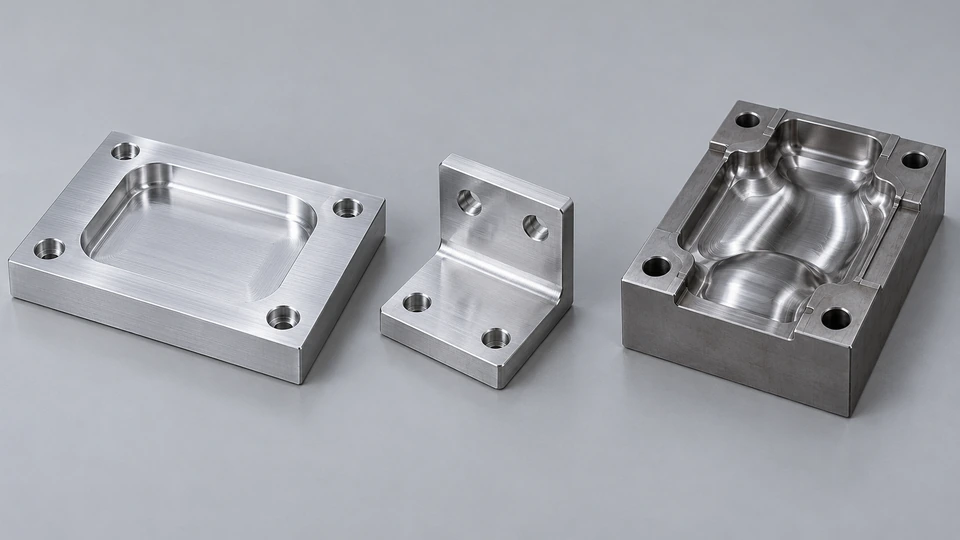
- Your workpiece is a plate or cover. Mounting holes, face milling, shallow pockets and slots can often be grouped into a clear top-access setup.
- You need to machine brackets or small prismatic components. A vise or dedicated fixture may provide an economical route, with repositioning for any remaining faces.
- Your workpiece includes a mold cavity or contoured surface. A suitable VMC can machine complex three-dimensional shapes; complexity alone does not make an HMC the better choice.
- You change jobs frequently. Accessible workholding and relatively simple fixtures can help when producing prototypes, repair components or varied short runs.
A mounting plate with a top pocket and several through-holes illustrates a straightforward VMC application. An HMC might machine it too, but its extra fixture and handling equipment may add little value for that job. Conversely, a VMC with multi-part fixtures or pallet automation can also be suitable for repeated production.
How to choose between an HMC and a VMC
Start with representative workpieces, then compare the complete machining route on each suitable configuration. Three checks help turn the general differences into a practical decision.
Match the required faces to the available axes
Mark the faces, holes, pockets and angled features that need machining. For each proposed setup, identify which features the tool can reach and which require reclamping.
On an HMC, confirm whether the rotary table only indexes to a position or can move in coordination with the cutting axes. These are different capabilities. On a VMC, assess whether a compatible fourth-axis fixture provides enough access before assuming that a different machine layout is necessary. Hurco’s technical guide to rotary and tilt-axis configurations helps distinguish these arrangements.
Where a fourth axis does not provide enough access, assess a five-axis solution and confirm whether indexed positioning or simultaneous motion is needed. The number of controlled axes and the workholding arrangement matter separately from whether the spindle starts horizontal or vertical.
Check the workpiece together with its fixture
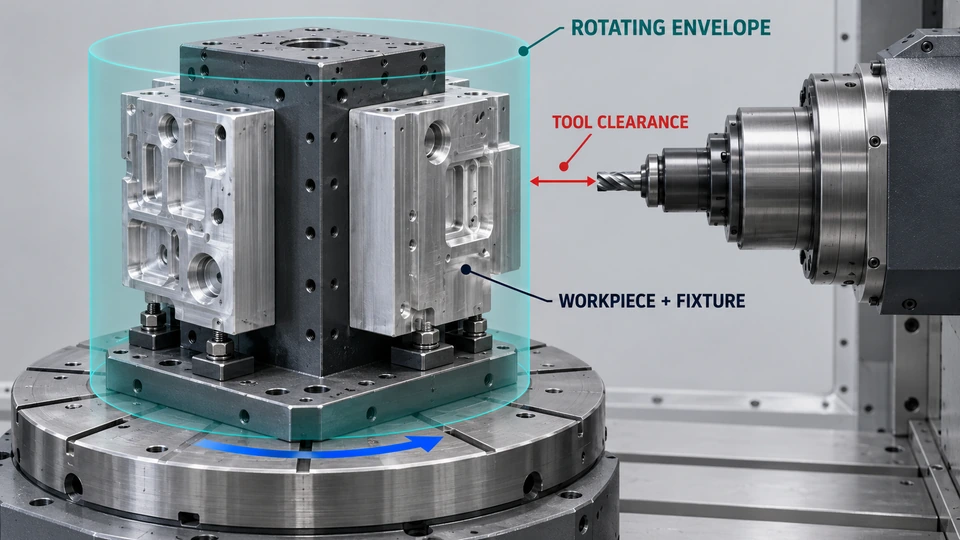
The workpiece must fit with its clamps, fixture and cutting tools in place. Table dimensions or X/Y/Z travel alone do not confirm usable capacity.
- Rotating space: check the complete sweep of the workpiece, fixture and projecting clamps through every required angle.
- Load: include the workpieces, tombstone or rotary fixture and all workholding equipment within the applicable table or pallet limits.
- Tool access: confirm that the spindle, holder and required tool length can reach each feature without hitting clamps or neighboring parts.
- Installed space: allow for loading, pallet movement, the chip conveyor and maintenance access around the machine.
A compact workpiece on a tall tombstone can demand more space than its own dimensions suggest. Likewise, adding a rotary table to a VMC reduces the remaining space available for the fixture, workpiece and tool.
Compare production cost, not only purchase price
A lower machine price does not automatically mean a lower cost per finished workpiece. Compare both routes for the same material, batch size and quality requirements.
Record cutting and tool-change time, loading, reclamping, inspection and any secondary operations. Identify which activities can happen while the machine is cutting and which stop it. Include the required fixtures, tools, programming and automation in the investment comparison.
A useful measure is total relevant production cost divided by the number of accepted workpieces. Use the same accounting scope for both routes and avoid counting costs twice when they are already included in an hourly machine rate.
For a recurring multi-face housing, reduced reclamping may justify an HMC. For a top-machined plate, a VMC may complete the job with a simpler setup. Validate the proposed process with representative trial machining and inspection; the machine name alone cannot establish cycle time, accuracy or payback.
Frequently asked questions
Is an HMC more accurate than a VMC?
An HMC is not automatically more accurate than a VMC. Accuracy depends on the specific machine, thermal conditions, workholding and cutting tools. Fewer setups can help maintain the relative positions of features. Compare finished workpieces against the same drawing tolerances using a consistent inspection method.
Can both machines cut steel and aluminum?
Yes, appropriately specified HMCs and VMCs can machine both materials. Check spindle speed and torque, rigidity, tooling, coolant and chip removal for the actual operation. Material alone does not determine the best spindle orientation.
Is a horizontal machining center the same as a five-axis machine?
No. “Horizontal” describes the spindle orientation, while “five-axis” describes the machine’s motion axes. Both horizontal and vertical machining centers can have five-axis configurations.
Can one HMC replace several VMCs?
It can in some production systems, but there is no reliable universal replacement ratio. Compare accepted output, remaining operations, staffing and demand for the same part mix. Also consider the effect on deliveries if concentrating work on one machine creates a single production bottleneck.
Conclusion
Horizontal machining centers are often a good fit for multi-face housings and repeated work where rotary fixtures, chip flow and pallet handling improve the process. Vertical machining centers offer convenient access for plates, brackets, molds and varied machining jobs. The best choice follows the workpiece features and production needs, with the actual axes and workholding checked before purchase.
If you are comparing these two arrangements for your production, HAISEN’s machining center range includes horizontal and vertical options. We can help assess the required machining faces, workholding space and configuration, then discuss suitable trial machining and inspection. Sharing representative workpiece drawings, materials and production quantities gives that comparison a practical starting point.