This article will explain 12 common types of CNC machines, helping readers understand how each machine works, where it is used, and how to choose the right CNC machine for different applications.
Why Are CNC Machines Divided into Different Types?
The wide variety of CNC machines on the market exists because there is no single “universal” machine capable of efficiently handling all manufacturing tasks. Instead, CNC machines are divided into specific types to address fundamental differences in machining processes, workpiece geometries, and material properties.
This classification is driven by several core manufacturing realities:
- Different workpiece shapes require different machining methods: A cylindrical shaft cannot be efficiently produced on a machine designed to cut flat plates.
- Different processes need distinct machine structures: Turning, milling, drilling, grinding, EDM, and sheet cutting rely on completely different physical mechanics, tool systems, and kinematic motions.
- Different materials demand specific cutting dynamics: Variations in material hardness and thermal sensitivity dictate the required cutting forces, spindle speeds, and overall machine rigidity.
- Different production requirements influence design: Achieving micrometer-level accuracy or handling high-volume continuous production requires highly specialized machine configurations and automation levels.
Understanding these underlying differences is the key to matching the right machine to the right manufacturing task. With this logic in mind, let’s explore the 12 most common types of CNC machines and their specific capabilities.
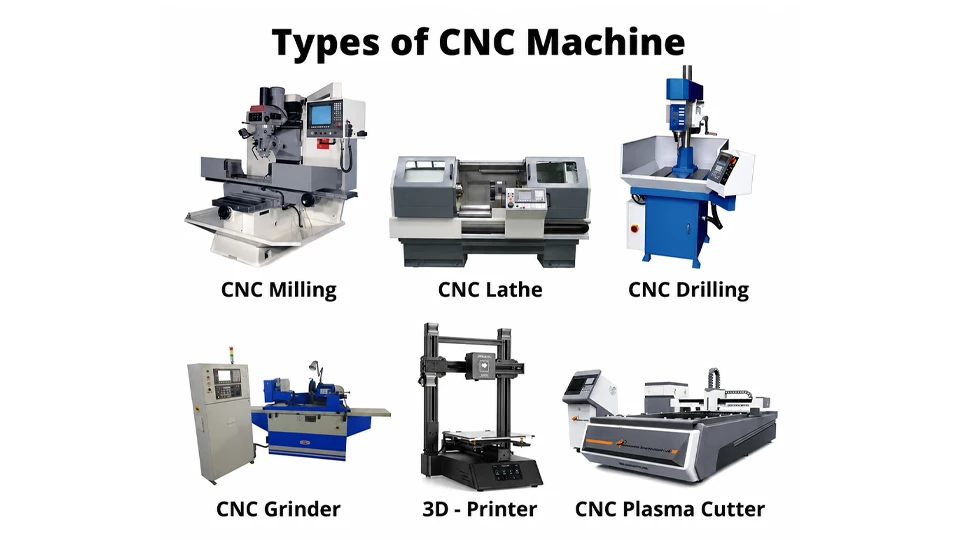
12 Common Types of CNC Machines Explained
To make it easier to understand, we have grouped the 12 most common CNC machines into three logical categories: Milling & Turning, Cutting, and Precision & Specialty.
Category 1: CNC Milling & Turning Machines
This category represents the foundation of modern 3D subtractive manufacturing, removing material using rotating tools or rotating workpieces.
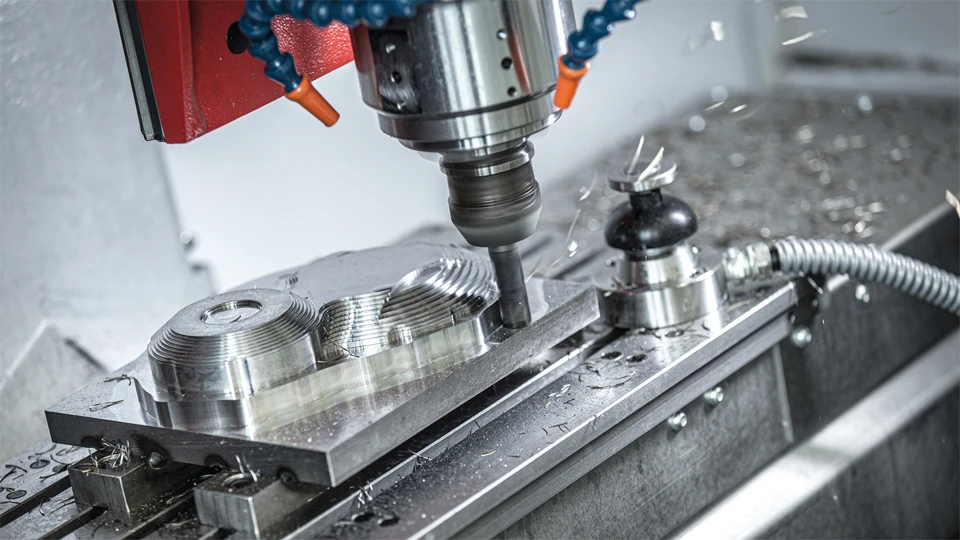
1. CNC Milling Machines
How it works: In CNC milling, the workpiece is held securely on a worktable while a high-speed rotating cutting tool moves along programmed axes to remove material.
- Suitable materials: Steel, cast iron, aluminum, brass, copper, plastics, and engineering materials.
- Typical applications: Molds, fixtures, brackets, housings, flat surfaces, grooves, and complex contours.
- Main strengths: CNC milling machines are extremely versatile for non-rotary parts. They are the standard solution for creating complex geometric features, slots, and multi-sided components.
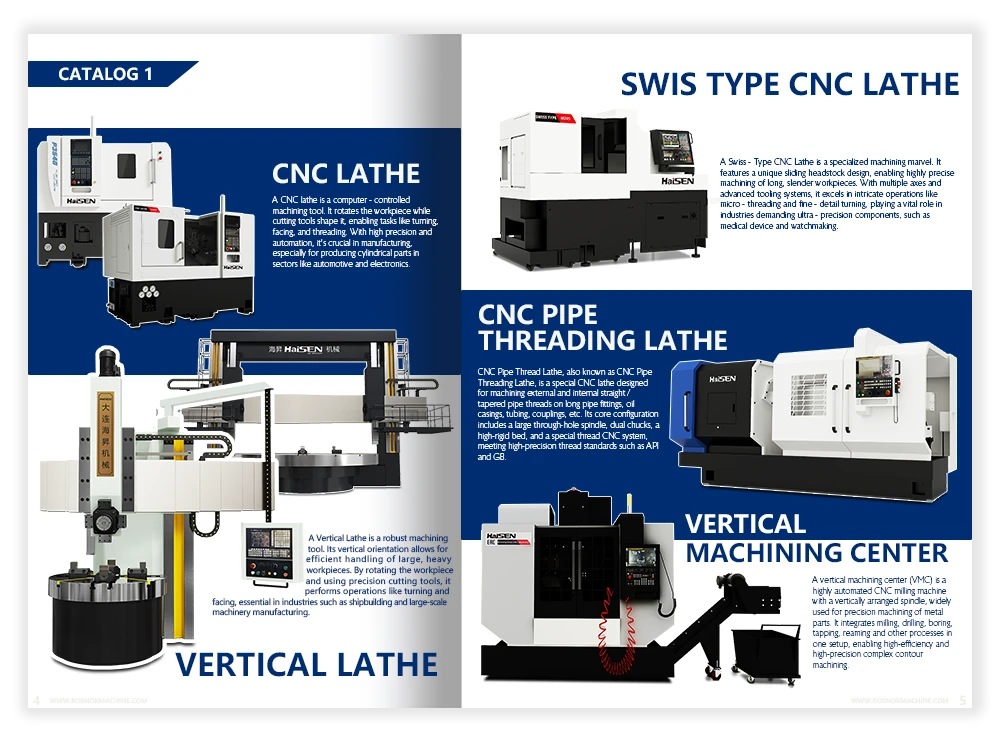
2. CNC Lathes and Turning Centers
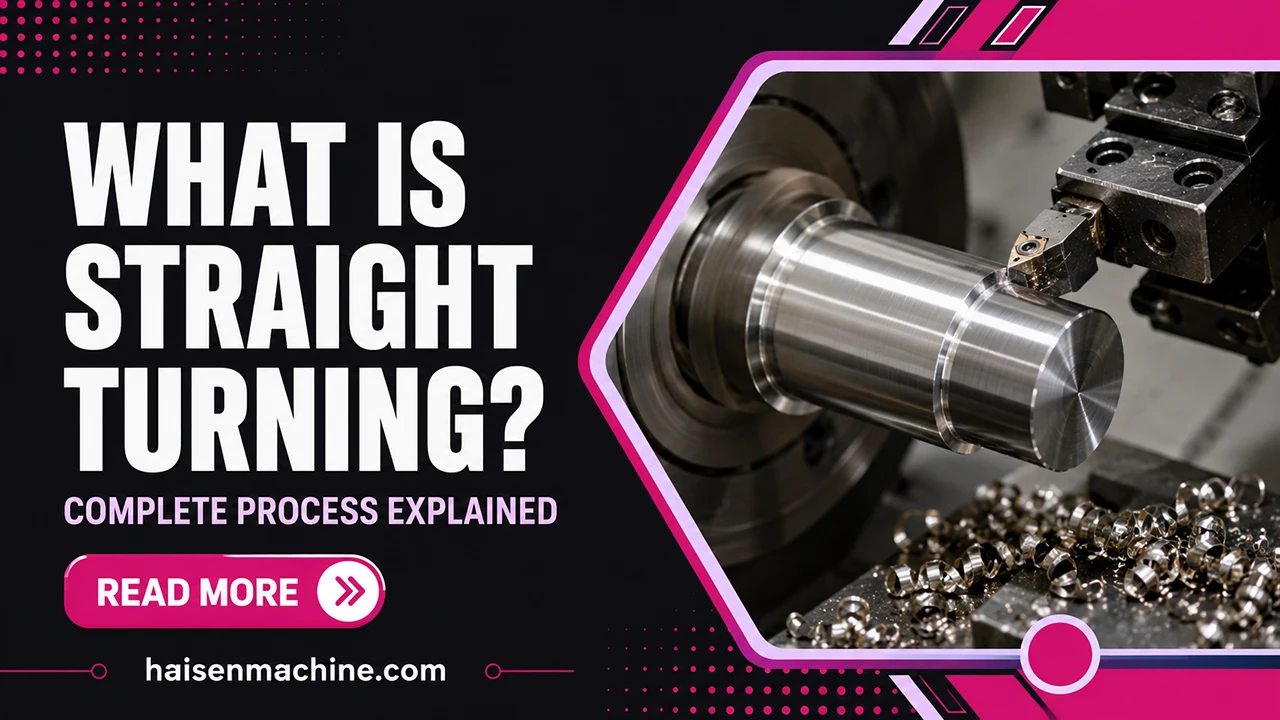
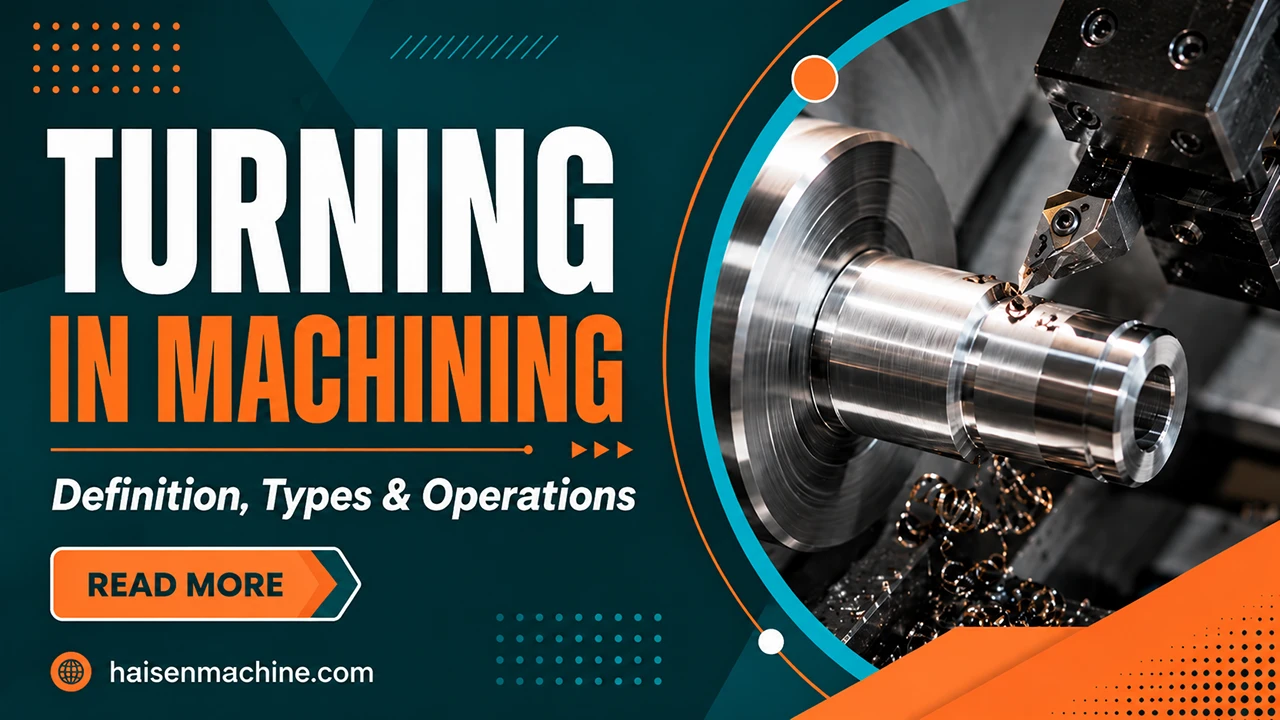
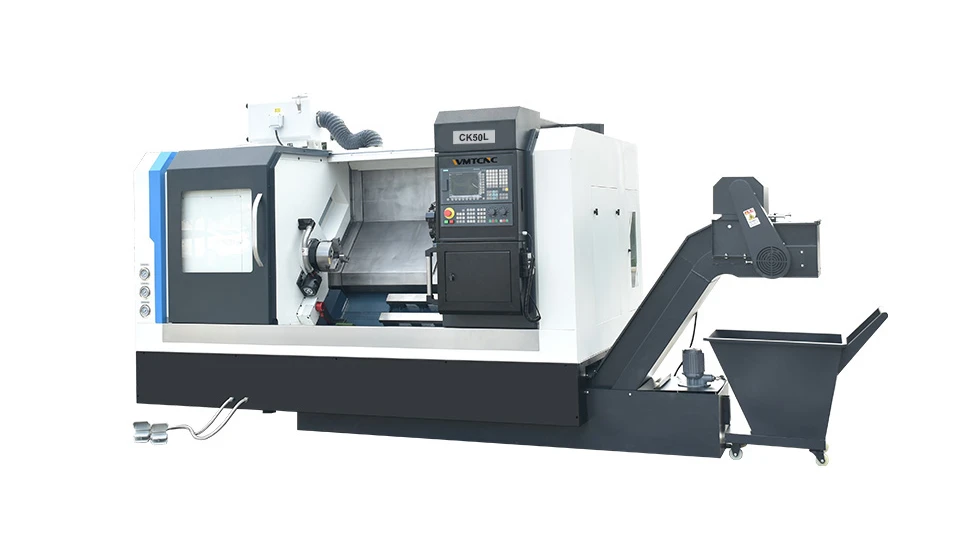
How it works: Unlike milling, a CNC lathe rotates the workpiece at high speeds while a stationary cutting tool moves along linear paths to shave away material from the inner and outer diameters.
- Suitable materials: Steel, stainless steel, aluminum, brass, cast iron, and titanium.
- Typical applications: Shafts, bushings, sleeves, flanges, discs, threaded parts, and automotive components.
- Main strengths: They are specifically designed for processing cylindrical or axis-symmetric parts. Turning centers often include turret tools and live tooling for higher efficiency than simple CNC lathes.
3. Mill-Turn CNC Centers
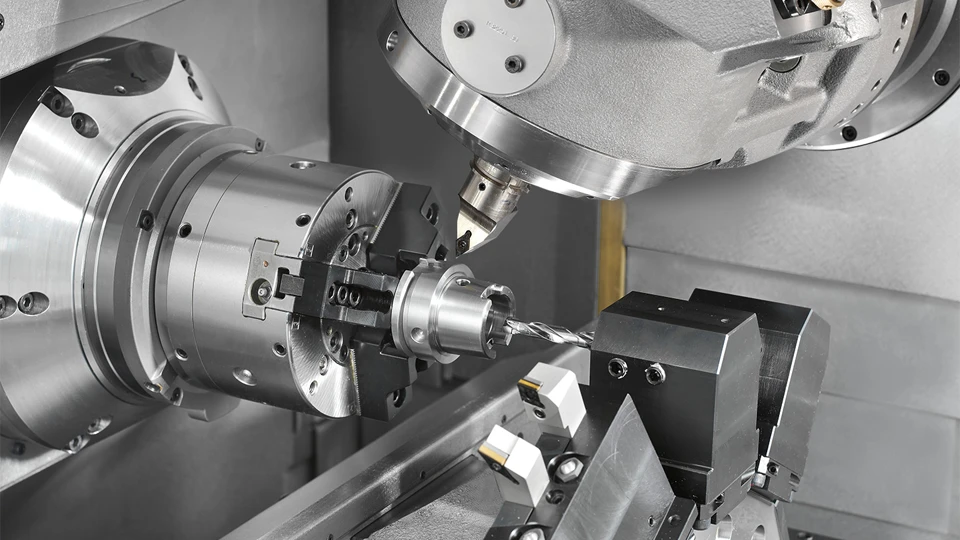
How it works: Mill-turn centers combine the capabilities of turning and milling into one machine. The workpiece can rotate like a lathe, while live tools perform milling, drilling, and tapping off-center.
- Suitable materials: Steel, stainless steel, aluminum, brass, titanium, and high-value metal alloys.
- Typical applications: Complex shafts, valve parts, hydraulic components, aerospace fittings, and automotive precision parts.
- Main strengths: The primary value is “one-setup machining.” By completing both turning and milling without moving the part to a second machine, it drastically reduces re-clamping errors and shortens the process flow.
4. Swiss-Type CNC Lathes
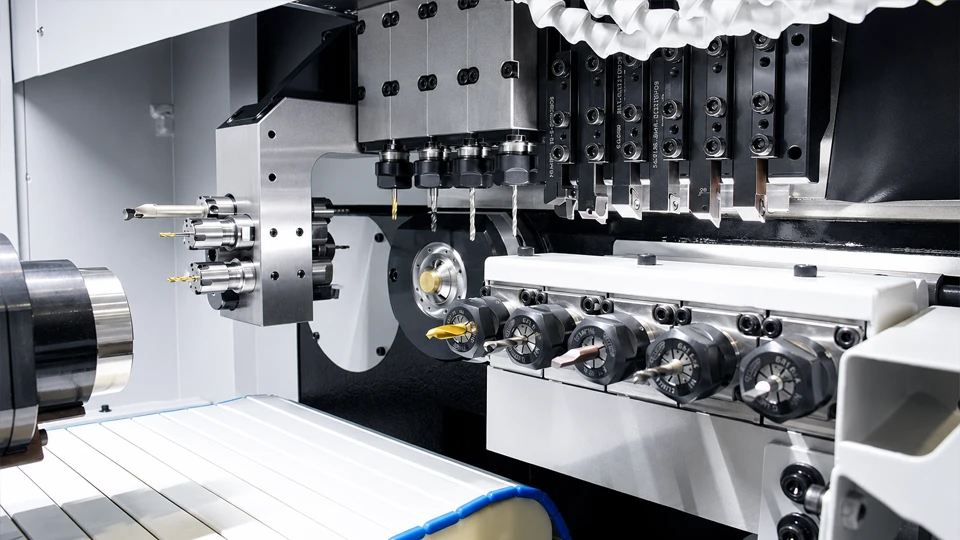
How it works: In a Swiss-type lathe, bar stock passes through a guide bushing. The cutting tool operates extremely close to this support point, which prevents the material from bending or deflecting under cutting pressure.
- Suitable materials: Stainless steel, titanium, brass, aluminum, medical alloys, and small-diameter bar stock.
- Typical applications: Medical screws, dental implants, watch parts, electronic pins, connectors, and aerospace micro-parts.
- Main strengths: They are the absolute standard for producing small, slender, and highly precise cylindrical parts, widely used for high-volume precision production.
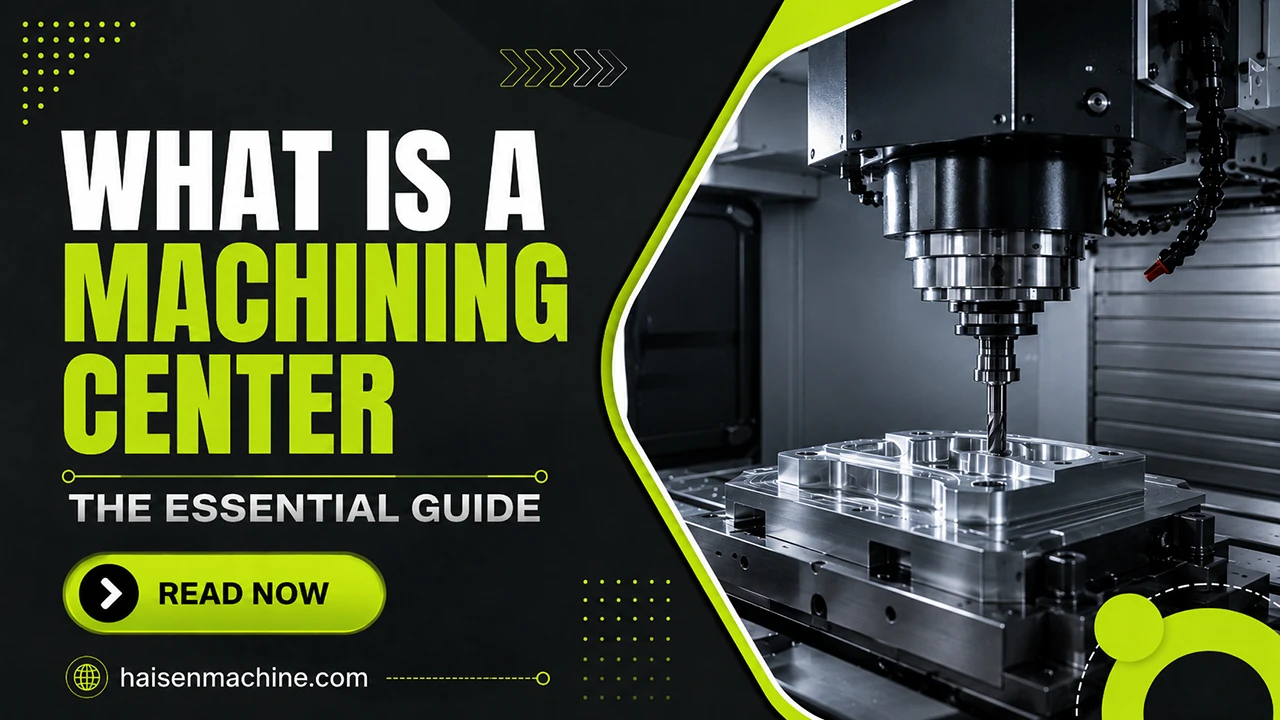
5. 5-Axis CNC Machining Centers
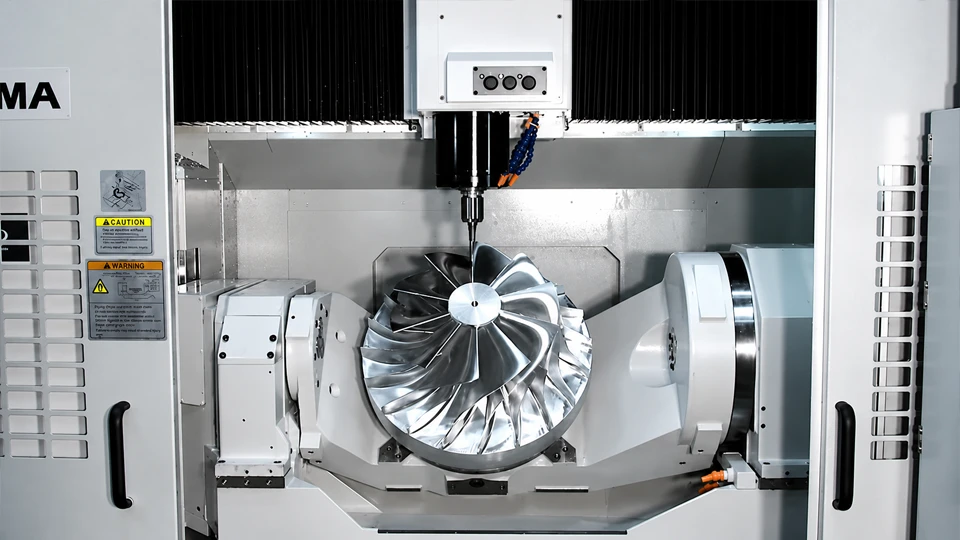
How it works: In addition to moving along the standard X, Y, and Z linear axes, a 5-axis machine introduces two rotary axes to tilt or rotate the tool or workpiece. This allows machining from multiple angles in a single setup.
- Suitable materials: Aluminum, titanium, stainless steel, tool steel, composite materials, and aerospace materials.
- Typical applications: Aerospace structural parts, impellers, turbine blades, medical implants, mold cavities, and complex curved surfaces.
- Main strengths: They are designed specifically for complex geometries and multi-angle features. They eliminate the need for complex fixtures and manual repositioning when creating highly intricate parts.
Category 2: CNC Cutting Machines
This category is primarily dedicated to 2D profile cutting, panel processing, and separating sheet materials.
6. CNC Laser Cutters
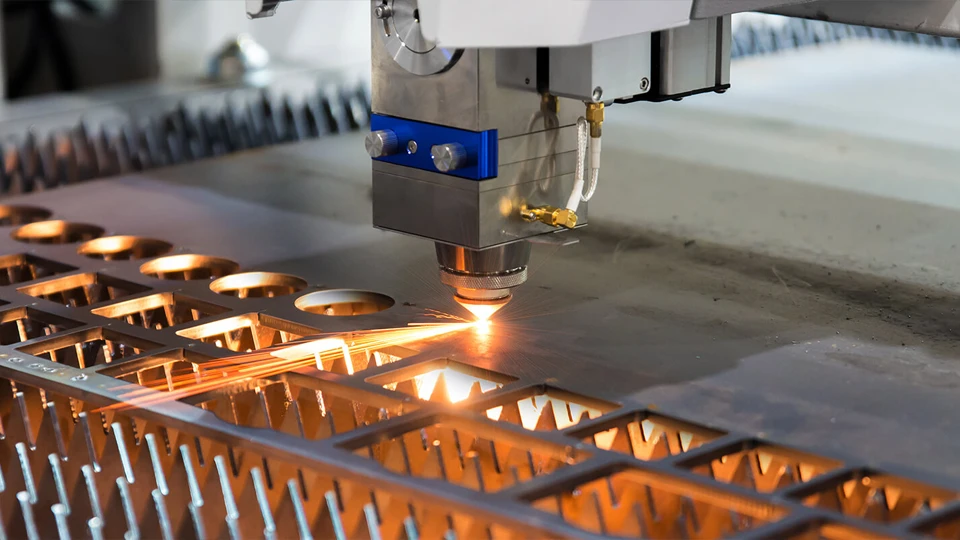
How it works: A high-energy, focused laser beam melts, burns, or vaporizes the material. The CNC system directs the cutting head along the programmed path to create precise profiles.
- Suitable materials: Sheet metal, stainless steel, carbon steel, aluminum, acrylic, wood, and some plastics.
- Typical applications: Sheet metal parts, electrical cabinets, signage, decorative panels, automotive sheet parts, and precision profiles.
- Main strengths: They are known for a very narrow kerf, extremely clean edges, high processing speeds, and excellent detail rendering on thin to medium-thickness materials.
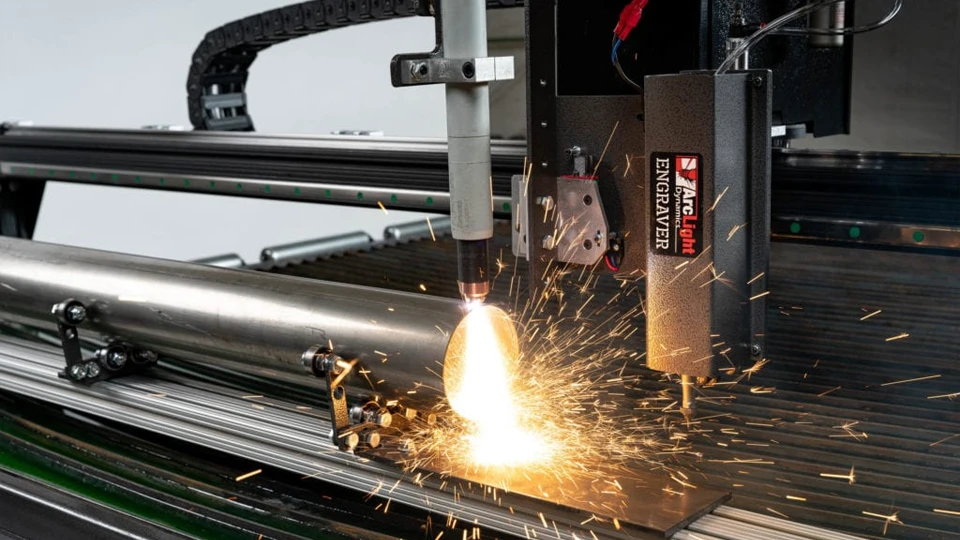
7. CNC Plasma Cutters
How it works: A high-temperature plasma arc melts through electrically conductive metals, while a high-velocity stream of gas blows the molten metal away to form the cut.
- Suitable materials: Carbon steel, stainless steel, aluminum, copper alloys, and other conductive metals.
- Typical applications: Steel plates, structural steel, shipbuilding parts, construction machinery plates, and heavy fabrication parts.
- Main strengths: Plasma cutters are highly efficient and cost-effective for slicing through medium to thick conductive metal plates, making them a staple in heavy industry and structural fabrication.
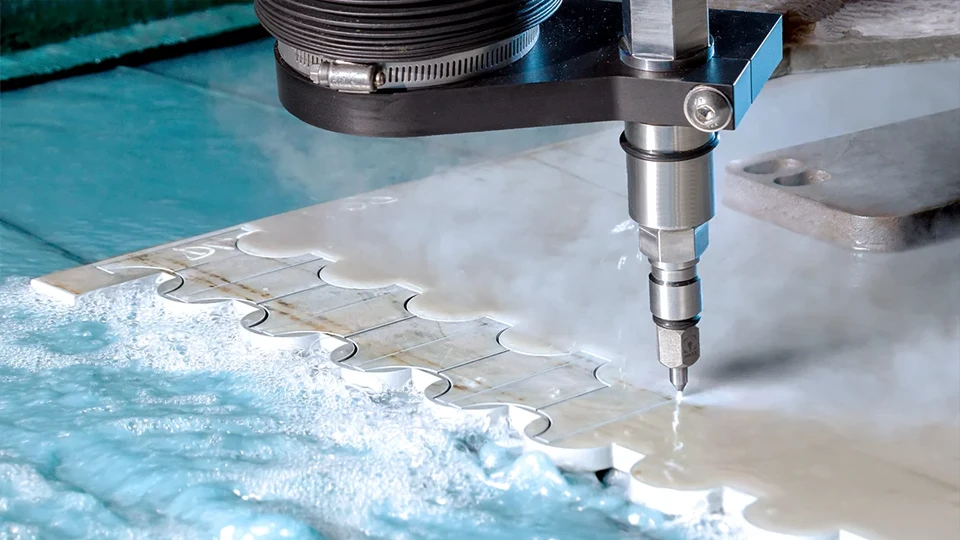
8. CNC Waterjet Cutters
How it works: A highly pressurized stream of water, usually mixed with abrasive particles (like garnet), physically erodes the material. Crucially, this is a mechanical cold-cutting process, not a thermal one.
- Suitable materials: Metal, stone, glass, ceramic, rubber, composites, and heat-sensitive materials.
- Typical applications: Thick metal plates, stone countertops, glass parts, ceramic components, composite panels, and aerospace materials.
- Main strengths: The absolute biggest advantage is the absence of a Heat-Affected Zone (HAZ). It prevents material warping, hardening, or property changes, making it the go-to solution for extremely thick or heat-sensitive materials.
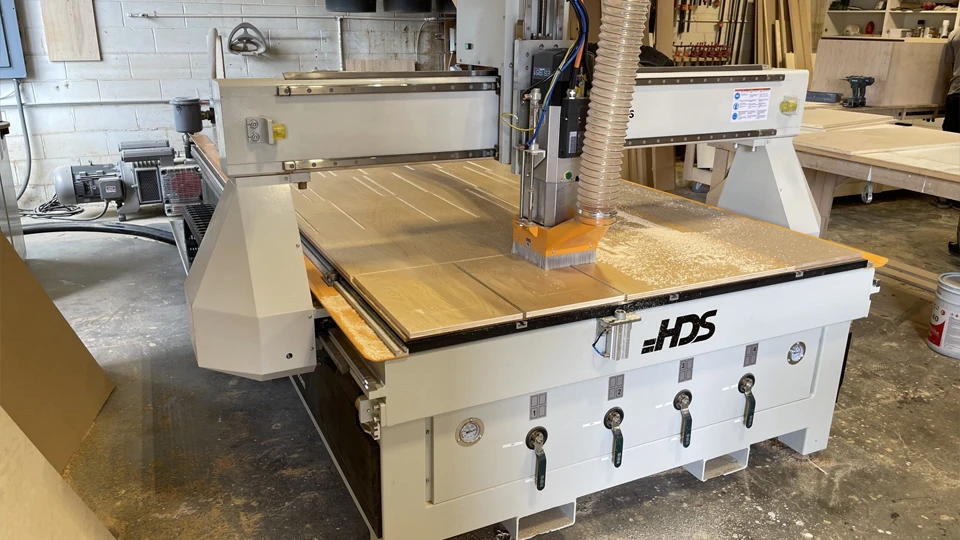
9. CNC Routers
How it works: Operating similarly to a milling machine but typically utilizing a gantry structure over a much larger working table, a high-speed rotating tool removes material from flat panels, sheets, or blocks.
- Suitable materials: Wood, MDF, plastics, acrylic, foam, composites, and sometimes thin aluminum sheets.
- Typical applications: Furniture panels, 3D signage, engraving, decorative parts, mold patterns, and large plastic enclosures.
- Main strengths: CNC routers excel at high-speed cutting, engraving, and shaping of light, non-ferrous, and non-metallic materials over large surface areas.
Category 3: Precision & Specialty CNC Machines
This category includes equipment designed for ultra-high tolerances, specialized hole-making efficiency, or processing materials that are simply too hard for traditional cutting tools.
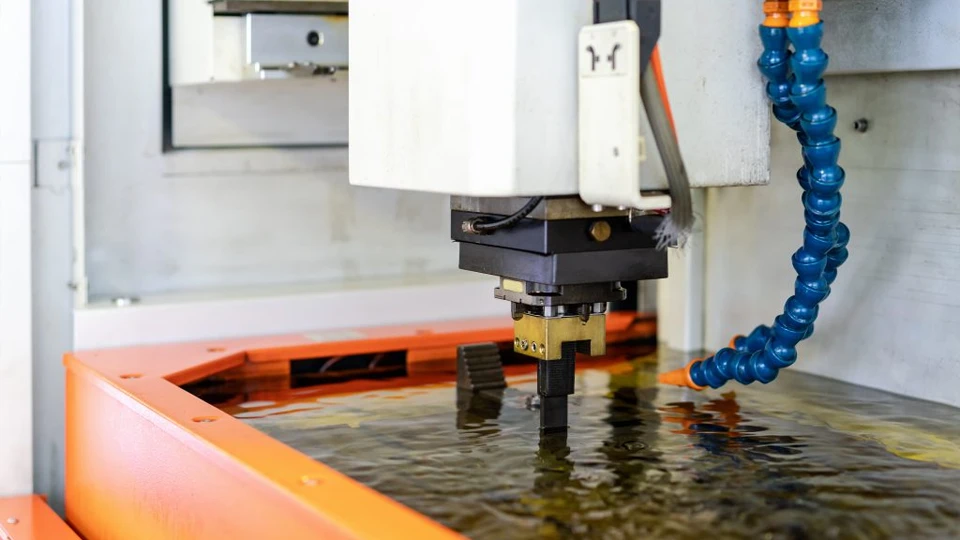
10. Electrical Discharge Machines (EDM)
How it works: EDM does not use a traditional sharp cutting tool. Instead, it removes material through a series of rapidly recurring, controlled electrical discharges (sparks) between an electrode and the workpiece, which melts and vaporizes the metal.
- Suitable materials: Only electrically conductive materials, including hardened steel, tool steel, carbide, titanium alloys, and mold materials.
- Typical applications: Mold cavities, stamping dies, narrow slots, fine profiles, micro-holes, and complex internal shapes.
- Main strengths: EDM can easily machine ultra-hard metals that would destroy conventional cutting tools. Because it is a non-contact process, it exerts zero mechanical cutting force on the workpiece, making it ideal for fragile or highly intricate features.
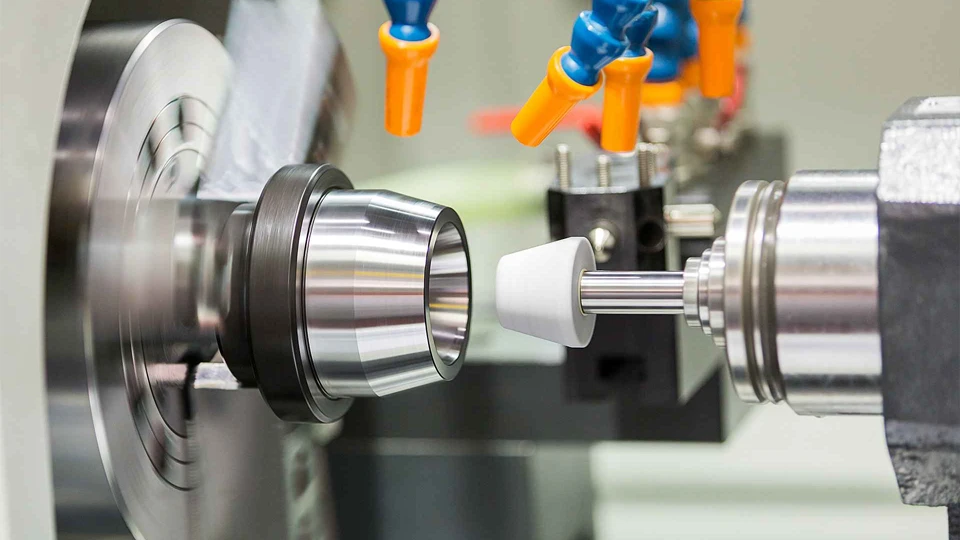
11. CNC Grinding Machines
How it works: A rotating abrasive grinding wheel removes microscopic amounts of material from the surface of the workpiece.
- Suitable materials: Hardened steel, bearing steel, tool steel, carbide, and precision metal parts.
- Typical applications: Bearing parts, precision shafts, mold components, cutting tools, machine spindles, guideways, and high-tolerance surfaces.
- Main strengths: Grinding is the ultimate finishing operation. It is specifically used to achieve micrometer-level dimensional accuracy and exceptional surface finishes (extremely low surface roughness) after the part has already been milled or turned.
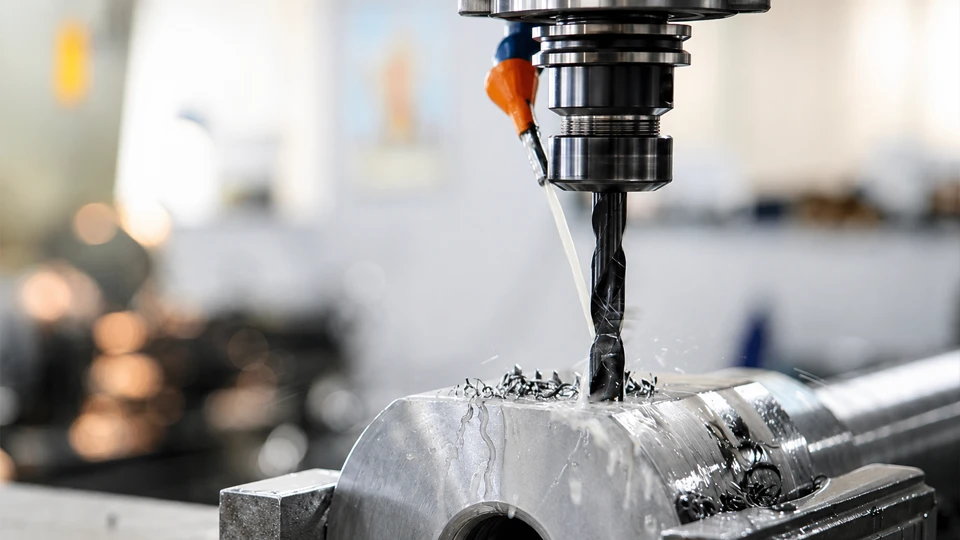
12. CNC Drilling Machines
How it works: A rotating drill bit is used to create holes at programmed coordinate positions. While standard machining centers can also drill, dedicated CNC drilling machines are structurally optimized for rapid, high-thrust hole-making over large areas.
- Suitable materials: Steel, cast iron, aluminum, heavy plates, and structural materials.
- Typical applications: Engine blocks, pipe flanges, heat exchanger tube sheets, multi-hole plates, and large structural frames.
- Main strengths: They provide unmatched speed, positional accuracy, and repeatability for high-volume, continuous hole machining, particularly on large structural components where standard milling machines would be inefficient.
Comparison Table of 12 Types of CNC Machines
To help you quickly navigate these options, the following table summarizes the core attributes, capabilities, and ideal use cases for each of the 12 CNC machine types discussed above.
| CNC Machine Type | Category | Main Process | Best For | Common Materials | Typical Applications | Key Advantage |
| CNC Milling Machines | Milling & Turning | Milling | Flat surfaces, slots, cavities | Metals, plastics, composites | Molds, housings, brackets | Flexible 3D machining for non-rotary parts |
| CNC Lathes and Turning Centers | Milling & Turning | Turning | Shafts, sleeves, discs | Metals, plastics | Rotary parts, automotive components | Efficient axis-symmetric machining |
| Mill-Turn CNC Centers | Milling & Turning | Turning & Milling | Complex rotary parts with milled features | Metals, high-value alloys | Aerospace fittings, complex shafts | One-setup machining, reduces re-clamping errors |
| Swiss-Type CNC Lathes | Milling & Turning | Precision Turning | Small, slender, high-precision parts | Medical alloys, precision metals | Medical screws, watch parts | Eliminates deflection on small or long parts |
| 5-Axis CNC Machining Centers | Milling & Turning | Multi-angle Milling | Complex curved surfaces | Aerospace alloys, tool steel | Impellers, turbine blades, medical implants | Single-setup machining for complex geometries |
| CNC Laser Cutters | Cutting | Laser Vaporizing | Thin to medium sheets | Metals, acrylic, wood | Sheet metal profiles, signage | Narrow kerf and extremely clean edges |
| CNC Plasma Cutters | Cutting | Plasma Arc Melting | Medium to thick conductive plates | Conductive metals (steel, aluminum) | Structural plates, shipbuilding parts | High speed and cost-effective for heavy metals |
| CNC Waterjet Cutters | Cutting | Abrasive Cold Cutting | Thick or heat-sensitive materials | Metals, stone, glass, composites | Stone countertops, thick metal parts | No Heat-Affected Zone (HAZ) |
| CNC Routers | Cutting | High-speed Routing | Large flat panels, soft materials | Wood, plastics, foam, thin aluminum | Furniture, 3D signage, patterns | Fast processing of large non-metallic sheets |
| Electrical Discharge Machines (EDM) | Precision & Specialty | Spark Erosion | Ultra-hard metals, complex cavities | Conductive metals (hardened steel) | Mold cavities, stamping dies | Cuts materials too hard for traditional tools |
| CNC Grinding Machines | Precision & Specialty | Abrasive Grinding | High-tolerance surfaces | Hardened metals, precision alloys | Bearings, machine spindles, guideways | Micrometer-level accuracy and fine surface finish |
| CNC Drilling Machines | Precision & Specialty | Hole Making | Efficient batch hole patterns | Steel, cast iron, heavy plates | Tube sheets, engine blocks, flanges | Unmatched speed for continuous hole machining |
How to Choose the Right CNC Machine
Selecting the right CNC equipment is not about finding the “best” or most expensive machine on the market; it is about finding the exact match for your production needs. To make an accurate and cost-effective decision, you should follow a logical, four-step elimination path: Process first, Shape second, Configuration third, and Cost last.
Step 1: Start with the Machining Process
The fundamental difference between CNC machines lies in how they remove material. Your first question must always be: What physical action needs to be done to the workpiece?
- If the task involves machining flat surfaces, slots, cavities, and complex contours, prioritize CNC milling machines.
- If the task requires turning outer diameters, inner holes, end faces, or threads, prioritize CNC lathes and turning centers.
- If the part requires both turning and milling in a single setup, look at mill-turn CNC centers.
- If the task involves cutting 2D profiles from sheet metal, evaluate laser, plasma, or waterjet cutters.
- If you need to process large wood, plastic, or foam panels, choose CNC routers.
- If the task involves eroding ultra-hard conductive materials or creating deep, narrow cavities, use EDM machines.
- If the goal is to achieve micrometer-level surface finishes on already machined parts, you need CNC grinding machines.
- If the primary operation is continuous, high-volume hole making, use CNC drilling machines.
Step 2: Then Match the Workpiece Shape and Size
Once the core process is identified, the specific geometry and dimensions of the part will further narrow down the equipment type.
- Standard round/cylindrical parts: Standard CNC lathes are sufficient.
- Small, slender, or micro-precision cylindrical parts: Swiss-type CNC lathes are required to prevent material deflection.
- Highly complex 3D geometries (like impellers): 5-axis CNC machining centers are necessary to avoid multiple complex setups.
- Thin to medium metal sheets: CNC laser cutters provide the best speed and edge quality.
- Thick conductive metal plates: CNC plasma cutters are the most cost-effective.
- Extremely thick, heat-sensitive, or non-conductive blocks: CNC waterjet cutters are the only viable cold-cutting option.
Step 3: Use Material, Accuracy, and Volume as Confirmation Factors
Material, accuracy, and production volume act as confirmation factors that determine the specific configuration of the chosen machine type.
- Material dictates rigidity and power: Processing titanium or hardened steel requires a machine with high structural rigidity, high-torque spindles, and robust cooling systems.
- Accuracy dictates control and mechanics: High-tolerance requirements dictate the quality of the CNC control system (such as advanced FANUC or Siemens controllers), the precision of the linear guideways, and the thermal stability of the machine bed.
- Volume dictates automation: Prototyping or low-volume runs can be done on standard 3-axis machines. High-volume production demands automation features like bar feeders, automatic tool changers, dual spindles, or robotic loading systems to minimize cycle times.
Step 4: Consider Total Cost, Not Only Machine Price
Many buyers focus entirely on the initial sticker price, but the Total Cost of Ownership (TCO) is what truly impacts manufacturing profitability.
A machine with a lower upfront cost can quickly become expensive if it suffers from poor rigidity, unstable accuracy, or frequent breakdowns. Conversely, over-investing in a highly automated 5-axis machine is a waste of capital if your application only requires simple 3-axis work.
When evaluating cost, always factor in:
- Tooling and custom fixture requirements.
- Energy consumption and floor space.
- Operator training and programming software compatibility.
- Downtime risks and after-sales support: Ensure your supplier provides rapid technical support, accessible spare parts, and reliable maintenance services, as machine downtime directly kills production margins.
Conclusion
Choosing the right CNC machine becomes much easier when the different types are understood clearly. Each machine has its own role. Milling machines shape complex features. Lathes produce rotary parts. Cutting machines handle sheets and profiles. EDM, grinding, and drilling machines solve more specific precision tasks. The key is to start from the machining process, then consider the workpiece shape, accuracy, material behavior, production volume, and long-term cost.
For projects that require reliable CNC machining equipment, Haisen provides a practical path from machine selection to production use. As a manufacturer of CNC machine tools, Haisen offers solutions for turning, milling, machining centers, drilling, grinding, and other machining needs, helping users match the right machine with the right application.