In modern manufacturing industries, turning is not just a simple shaping process but a critical production method used to manufacture shafts, bushings, threaded parts, and precision components across automotive, aerospace, energy, and machinery sectors. Its ability to ensure high dimensional accuracy, repeatability, and efficient material removal makes it indispensable in both mass production and custom engineering applications. Without reliable turning operations, many rotating mechanical systems would fail to meet performance and durability requirements.
This article explains the definition of turning in machining, its main types, key operations, and essential process parameters, while also exploring how CNC turning technology enhances precision, productivity, and industrial manufacturing efficiency.
What Is Turning in Machining? (Definition)
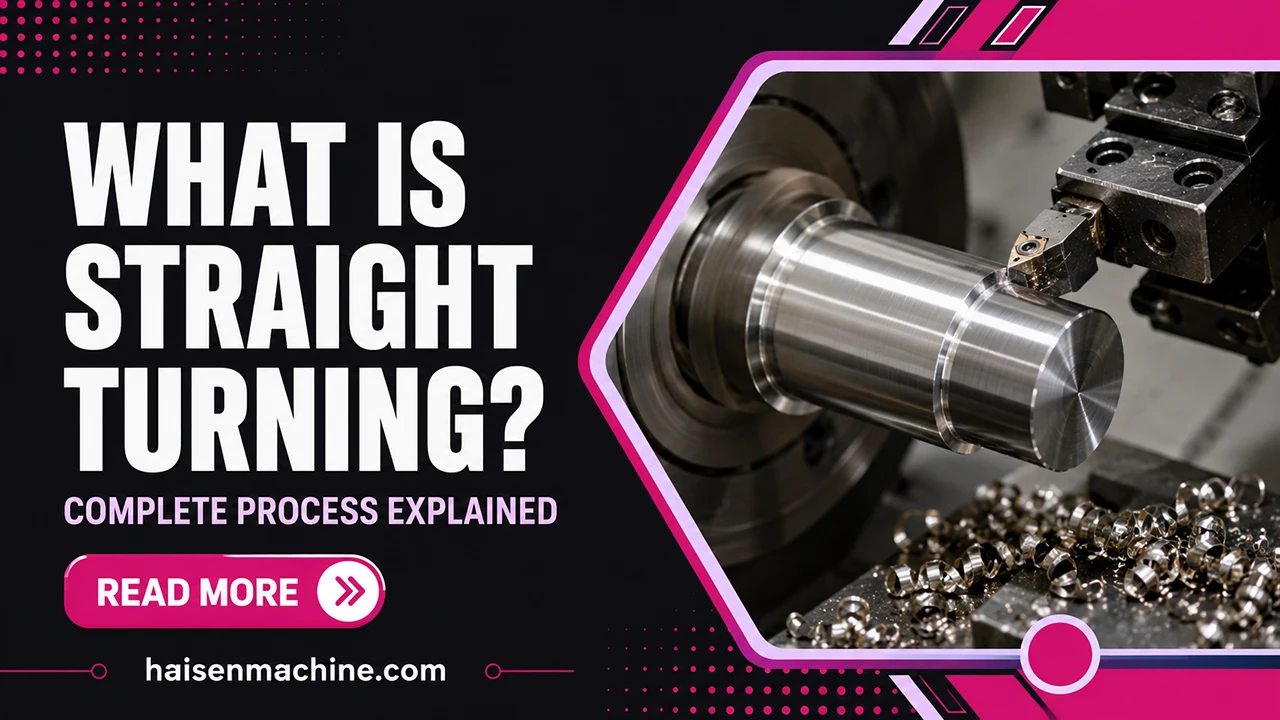
Turning in machining is a material removal process where a cutting tool removes excess material from a rotating workpiece to form precise rotational geometries such as cylinders, cones, and stepped surfaces. The cutting action is achieved through controlled relative motion between the stationary cutting tool and the rotating workpiece.
The fundamental principle of turning is based on continuous rotation of the workpiece combined with linear feed movement of the cutting tool. This interaction enables stable and accurate shaping of metal parts while maintaining consistent dimensional control and surface quality during machining.
Unlike other machining processes such as milling or drilling, turning specifically focuses on rotational symmetry components. It is widely used to produce parts that require precise diameters and smooth outer or inner surfaces, making it a core process in CNC lathe machining operations.
Main Types of Turning Operations
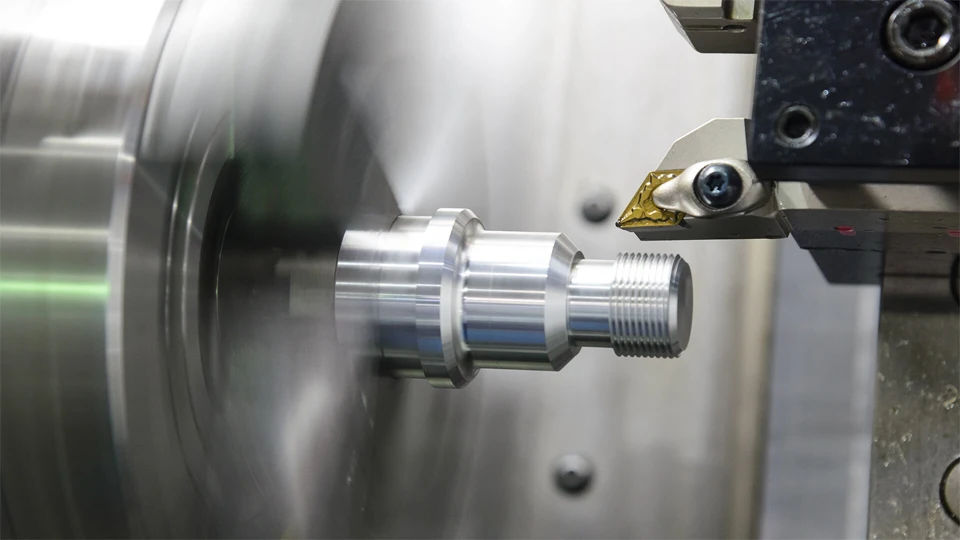
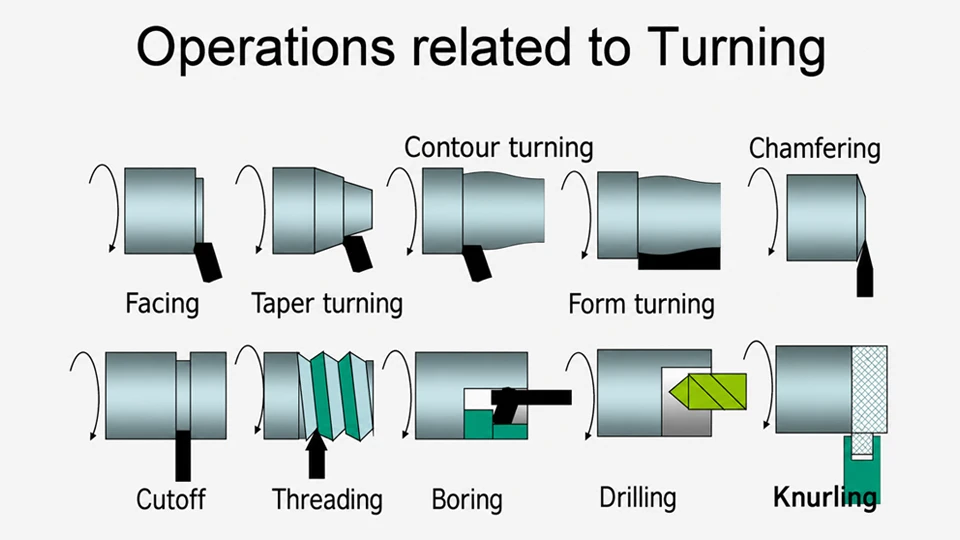
Turning operations can be classified into several fundamental types based on the geometry being produced and the cutting action involved. Each type serves a specific machining purpose in CNC lathe manufacturing and contributes to shaping different functional features of a workpiece.
External Turning
External turning is used to machine the outer surface of a rotating workpiece. It is primarily applied to reduce diameter, create stepped shafts, and form external cylindrical profiles. This is one of the most common turning operations in mechanical production.
Internal Turning (Boring)
Internal turning is used to enlarge or refine internal holes in a workpiece. It is typically applied after drilling to achieve higher dimensional accuracy and better surface quality. It is commonly used in components such as bushings and sleeves.
Facing
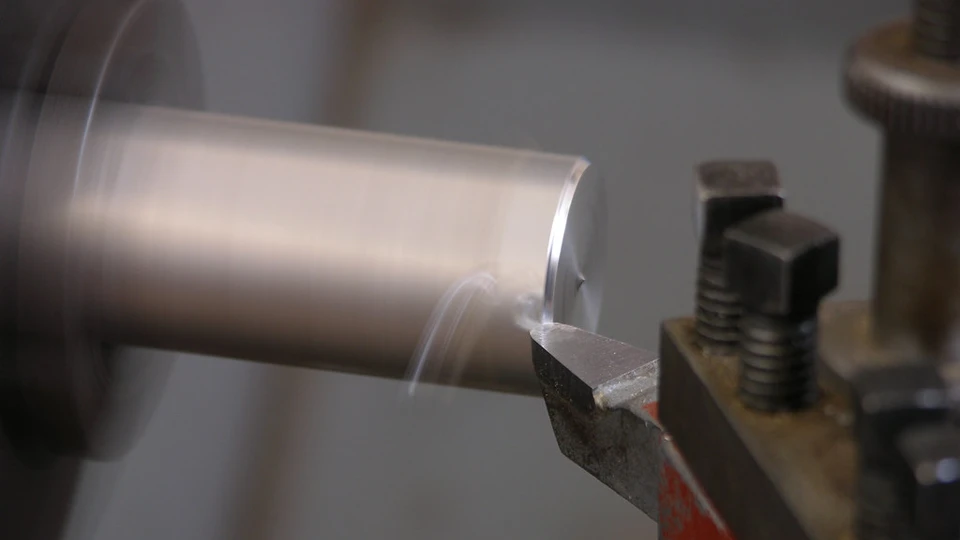
Facing is a machining operation used to produce a flat surface at the end of a rotating workpiece. It is mainly used to ensure that the end face is perpendicular to the workpiece axis and has a controlled surface finish.
Thread Turning
Thread turning is used to generate internal or external threads on a cylindrical surface. It is widely applied in fasteners, pipe fittings, and mechanical assemblies where threaded connections are required.
Grooving
Grooving is the process of cutting narrow channels into the surface of a workpiece. These grooves can serve functional purposes such as sealing locations, retaining rings, or assembly clearance features.
Knurling (Surface Texturing)
Knurling is a deformation-based process used to create patterned textures on the surface of a cylindrical part. It is mainly used to improve grip and handling, especially in manual control components such as knobs and handles.
Reaming (Precision Hole Finishing)
Reaming is a finishing operation used to improve the dimensional accuracy and surface quality of pre-drilled or bored holes. It is commonly used in precision assemblies where tight tolerances are required.
Taper Turning
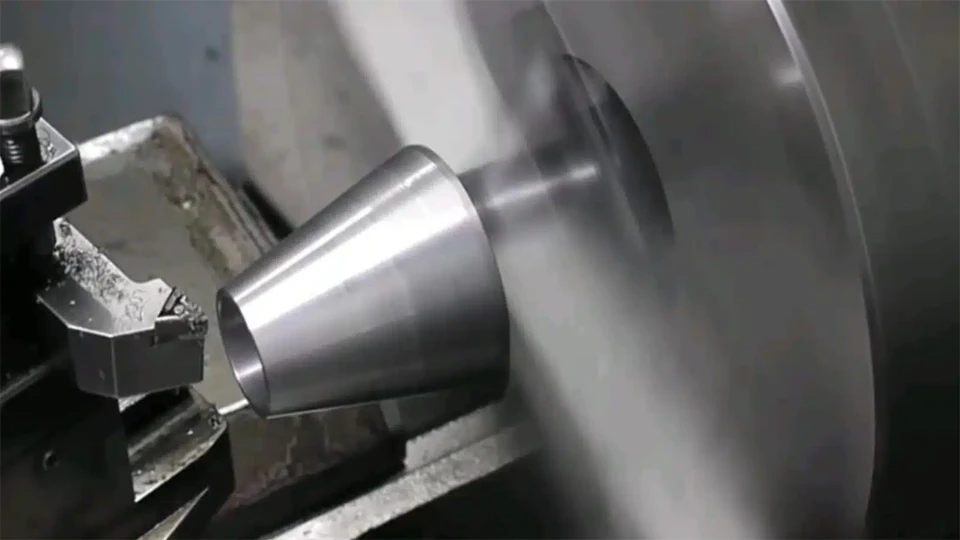
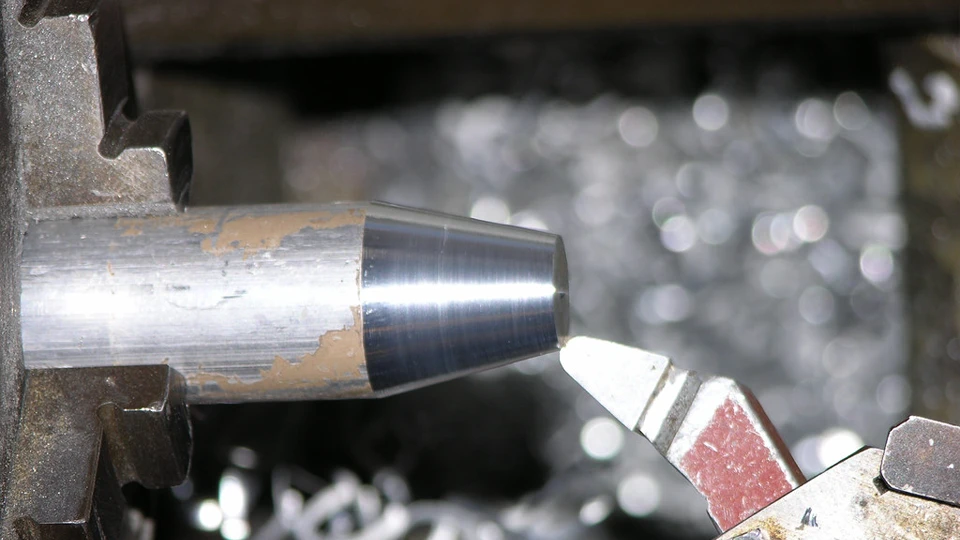
Taper turning is used to produce conical surfaces by gradually changing the diameter along the length of the workpiece. It is often used in alignment components, fittings, and self-locking mechanical parts.
How Does the Turning Process Work?
Turning operations involve the controlled removal of material through the interaction between the cutting tool edge and the rotating workpiece surface. The material is removed in the form of chips as the tool continuously engages with the workpiece under relative motion.
During the cutting process, shear deformation occurs in the workpiece material ahead of the cutting edge, causing it to separate and form chips. This chip formation process is continuous in most turning operations and directly influences surface quality, tool wear, and machining stability.
The nature of turning operations can vary depending on the cutting direction and geometry being produced. For example, operations such as external or internal cutting involve different contact conditions between tool and workpiece, but all rely on the same fundamental principle of controlled material shear removal.
In practical machining, turning operations are designed to maintain stable cutting conditions, ensuring consistent chip flow and predictable material removal behavior throughout the process.
Turning Tools and Equipment
Executing precise turning operations requires a robust combination of machinery, cutting implements, and secure workholding devices. The hardware setup directly dictates the production capacity and tolerance limits of the process.
Lathe Machines
The primary machine tool utilized for turning is the lathe, which comes in two distinct industrial categories:
- Conventional Lathes: Manually operated machines requiring a skilled machinist to control tool movement via handwheels. They remain highly practical for one-off custom parts, maintenance, and toolroom repairs.
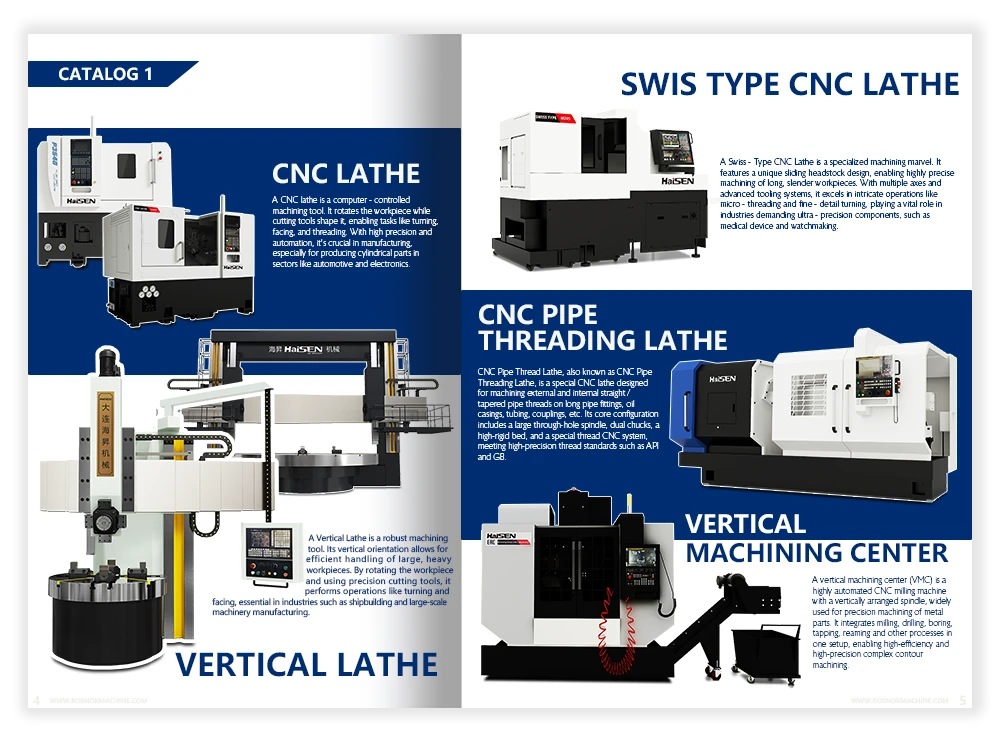
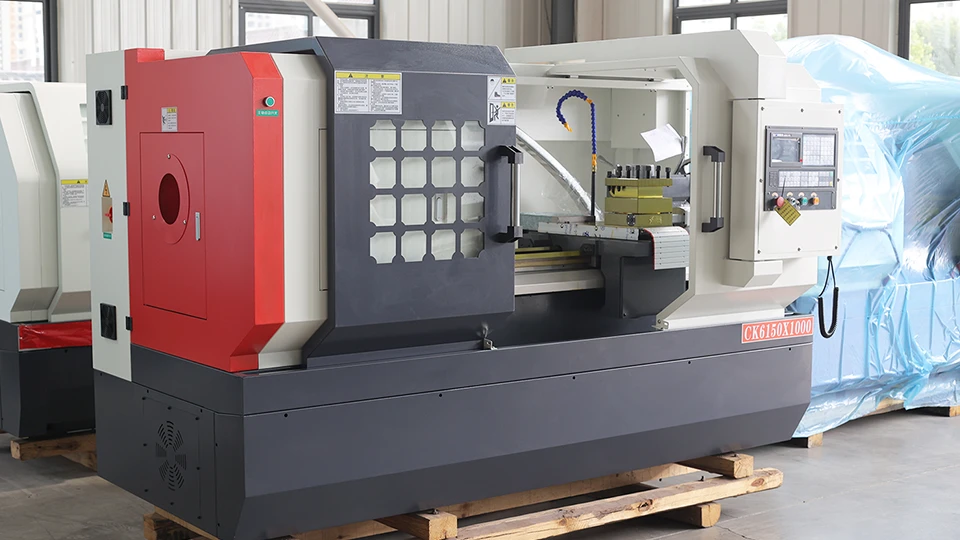
- CNC Lathes: Computer Numerical Control (CNC) lathes automate the cutting process using programmed instructions. By eliminating manual intervention, they provide unmatched repeatability, tight tolerances, and rapid production speeds, serving as the workhorse of modern manufacturing.
Cutting Tools
The physical removal of material relies entirely on the single-point turning tool. While historical tools were shaped from solid high-speed steel, modern industrial turning predominantly utilizes carbide tools. These systems typically feature indexable inserts—small, geometrically precise, and highly wear-resistant cutting tips clamped mechanically into a heavy-duty tool holder. When an edge dulls, the operator simply rotates or swaps the insert rather than re-sharpening the entire tool, drastically reducing machine downtime.
Tool Holders & Fixtures (Workholding)
Securing the workpiece firmly against rotational centrifugal forces and extreme cutting pressures is critical for safety and precision.
- Chucks: The most common workholding device, typically utilizing three or four adjustable jaws to grip and center raw material firmly on the main spindle.
- Collets: Cylindrical, slotted sleeves that grip the workpiece continuously around its entire circumference. Collets provide superior concentricity and prevent surface marring, making them ideal for high-precision, smaller-diameter bar stock.
- Tailstock Support: Positioned opposite the main spindle, the tailstock engages the free, unsupported end of long workpieces. This provides essential structural support to prevent the material from deflecting (bending) or vibrating under heavy cutting forces.
Key Machining Parameters in Turning
Optimizing a turning operation requires the precise balance of several distinct machining parameters. These variables directly dictate production efficiency, dimensional accuracy, and the operational lifespan of the cutting tools.
Cutting Speed
Cutting speed defines how fast the uncut surface of the workpiece moves past the stationary cutting edge, typically measured in surface meters per minute (m/min) or surface feet per minute (SFM). It is the primary factor influencing tool life. Excessive speeds generate destructive heat that rapidly degrades the insert, while speeds that are too low drastically reduce manufacturing efficiency.
Feed Rate
Feed rate is the linear distance the cutting tool advances along the workpiece per single revolution, typically measured in millimeters per revolution (mm/rev). This parameter heavily dictates the final surface finish. A lower feed rate produces a significantly smoother, finer surface, whereas a higher feed rate increases productivity at the cost of surface roughness.
Depth of Cut
Depth of cut refers to the radial thickness of the material layer removed by the tool in a single pass. This parameter is the main driver of the Material Removal Rate (MRR). Maximizing the depth of cut is highly efficient for bulk material removal (roughing) but requires immense machine rigidity to prevent vibration (chatter) and ensure part stability.
Cooling and Lubrication
While not a kinematic parameter, the systematic application of cutting fluids is integral to the turning environment. High-pressure coolant is directed precisely at the cutting zone for vital heat reduction and efficient chip evacuation. Proper lubrication fundamentally minimizes friction-induced tool wear and prevents the thermal distortion of the machined component.
Industrial Applications of Turning
Turning is widely used across multiple industrial sectors where precision rotational components are required. Its ability to produce accurate cylindrical and complex geometries makes it a core manufacturing process in modern production systems.
- Automotive Industry: Essential for manufacturing transmission shafts, custom bearings, and engine valves, ensuring precise fitment and long-term mechanical reliability in vehicle assemblies.
- Aerospace Sector: Utilized to produce critical flight components like turbine engine shafts and specialized high-strength fasteners, where strict tolerances and material integrity are non-negotiable.
- Oil & Gas: Heavily relied upon to machine high-pressure pipe fittings, robust valve bodies, and drilling components capable of withstanding extreme environmental stress.
- Medical Precision Parts: Indispensable for creating biocompatible orthopedic implants, tiny bone screws, and surgical instruments that demand microscopic dimensional accuracy.
- Machinery Manufacturing: Provides the structural backbone for heavy industrial equipment, outputting large-scale hydraulic cylinders, precision industrial rollers, and heavy-duty motor spindles.
Ultimately, across all these demanding sectors, turning provides the essential manufacturing foundation necessary to ensure complex mechanical assemblies function seamlessly and reliably.
Advantages and Limitations of Turning
Turning is a highly efficient machining process widely used in modern manufacturing for producing precise rotational components with consistent dimensional accuracy. It is particularly effective in mass production environments where stability, repeatability, and productivity are required.
Advantages
Turning provides high machining efficiency for axisymmetric parts such as shafts, bushings, and cylindrical components. It ensures consistent dimensional accuracy and stable surface quality when properly controlled, making it suitable for both mass production and precision engineering applications.
Another major advantage is its flexibility in production scale. Turning can be performed on both CNC and conventional lathes, allowing manufacturers to switch between automated high-volume production and manual low-volume or prototype machining depending on requirements.
The process also offers relatively stable material removal, which contributes to predictable machining behavior and reduced variation between produced parts.
Limitations
Turning is inherently limited to rotational or axisymmetric geometries, which restricts its use compared to multi-axis machining processes. Components requiring complex non-rotational features cannot be fully produced using turning alone.
Tool wear is another limitation, especially when machining hard materials or operating under high cutting loads, which can affect surface quality and dimensional consistency over time.
In addition, long or slender workpieces may experience deflection during machining, requiring additional support and careful setup to maintain stability.
Conclusion
Turning in machining plays a fundamental role in modern manufacturing, serving as one of the most essential processes for producing precise rotational components. From basic cylindrical shapes to more complex geometries, it provides a stable and efficient method of material removal that supports a wide range of industrial applications. Overall, its value lies in the balance between simplicity, accuracy, and production efficiency, making it a cornerstone process in both traditional and CNC-based machining systems.
In the field of advanced CNC manufacturing, companies such as Haisen contribute to the development and supply of high-performance turning and machining solutions. By focusing on precision engineering and industrial reliability, Haisen integrates modern CNC lathe technology into practical production environments, supporting manufacturers in achieving consistent machining quality and improved production efficiency across global industries.